[Disponibilità limitata]{class="badge informative"}
Manage user access through Permissions manage-user-access
Manage permissions and user access to individual components within Adobe Real-Time CDP Collaboration through the Experience Cloud Permissions interface. Permissions allows system and product administrators to define roles to manage user access to specific features and resources.
Configure access to Permissions permissions-access
To access Permissions, you must have both product administrator and user access to the Adobe Experience Platform product. A system administrator is required to configure product administrator privileges, while user privileges can be configured by a system or product administrator. For more information on the administrative roles, read the access control heirarchy guide.
System Administrators: configure product administrator access admin-access
Grant a user product administrator access to give them administrative capabilities within the Experience Platform product through the following steps:
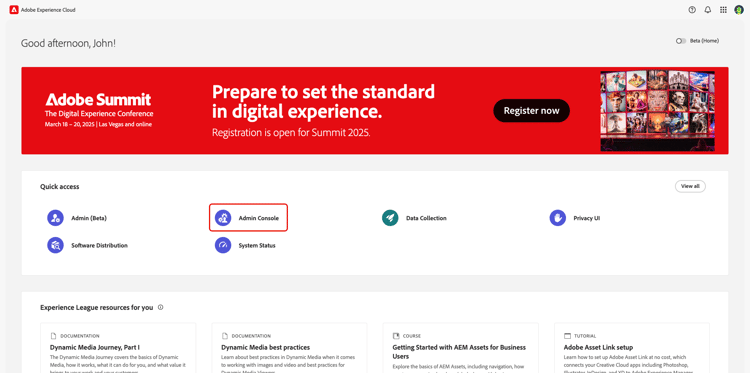
Log in to Adobe Experience Cloud with your credentials. The home view displays with a list of your available products within the Quick access section. Seleziona Admin Console.
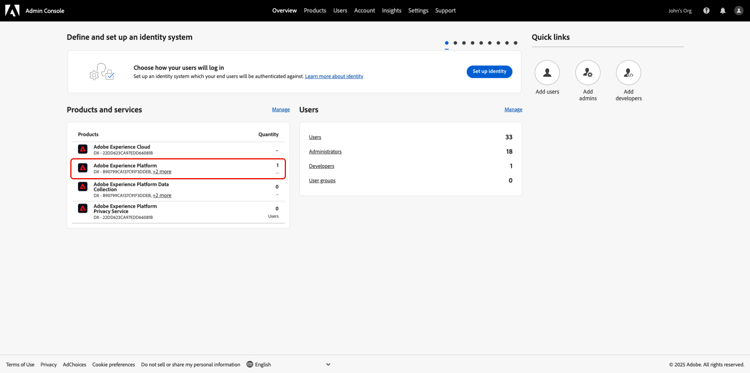
The Adobe Admin Console overview dashboard displays. Selezionare Adobe Experience Platform dall’elenco Prodotti in Prodotti e servizi.
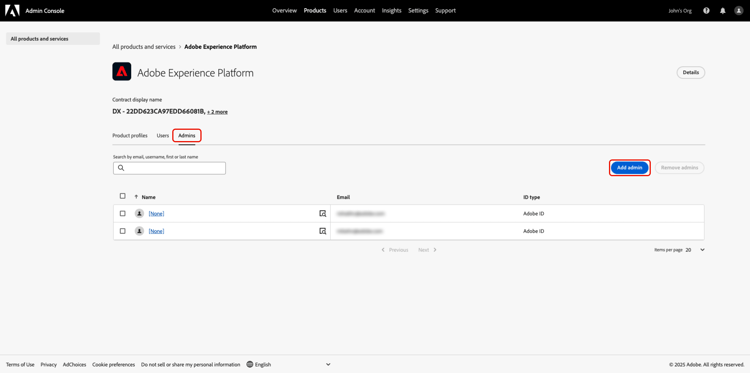
The Adobe Experience Platform dashboard displays. Select the Admins tab and then select Add admin.
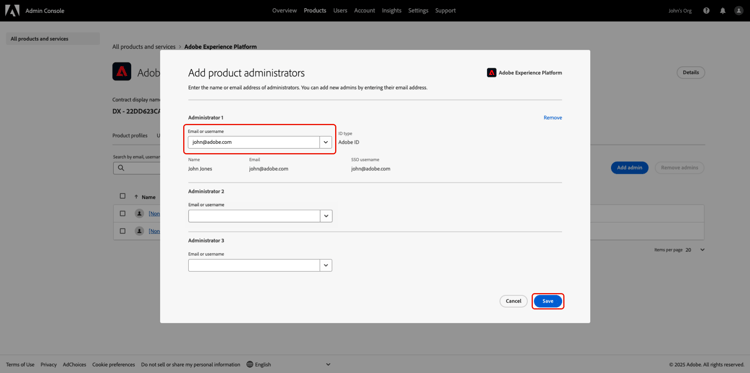
The Add product administrators dialog appears. Enter the user email or username into the Email or username text field and then select the correct account from the dropdown. Select Save to finish adding the user as a product administrator.
The user now has product administrator privileges and can perform administrative functions, such as adding users or other admins, to the product within the Admin Console. Next they’ll need user access to the Experience Platform product to access and perform functions within Permissions.
Administrators: configure user access to Experience Platform user-access
Now that you’ve granted the user product administrator access, you need to provide them user access to the Experience Platform product. As part of the access configurations, you’ll assign the user specific product profiles.
Navigate to the Admin Console and select Adobe Experience Platform from the Products list under Products and services.
Select the Users tab and then select Add users.
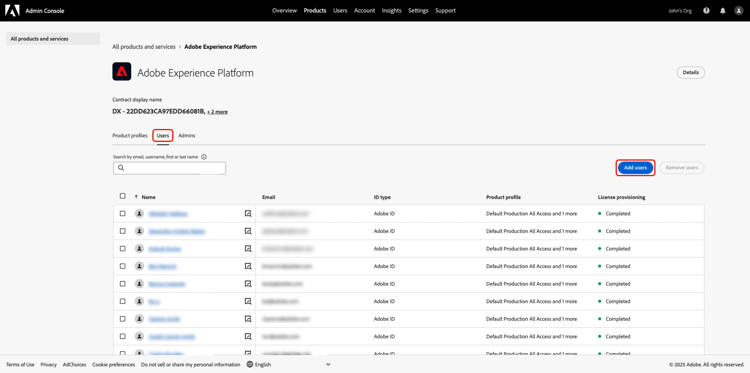
The Add users to this product dialog appears. Enter the user’s name or email into the Name, user group or email address text field and then select the correct account from the dropdown. Next, select the Products add option.
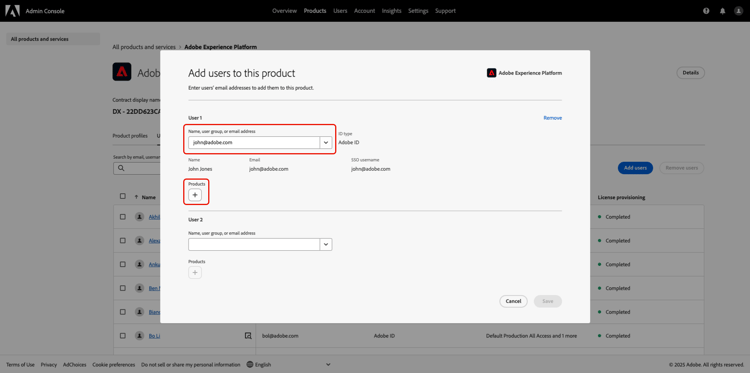
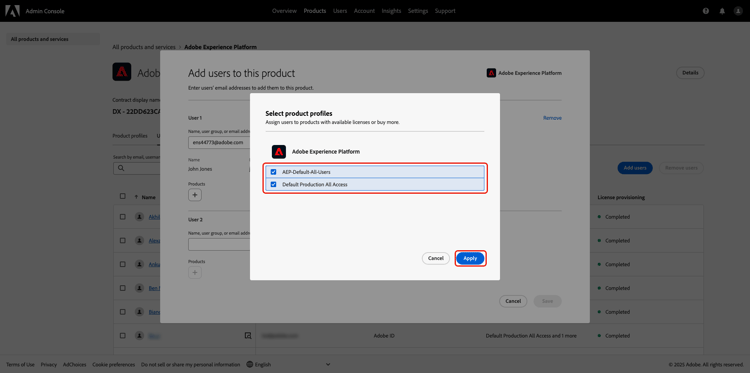
The Select product profiles dialog appears. Select AEP-Default-All-Users and Default Production All Access and then select Apply.
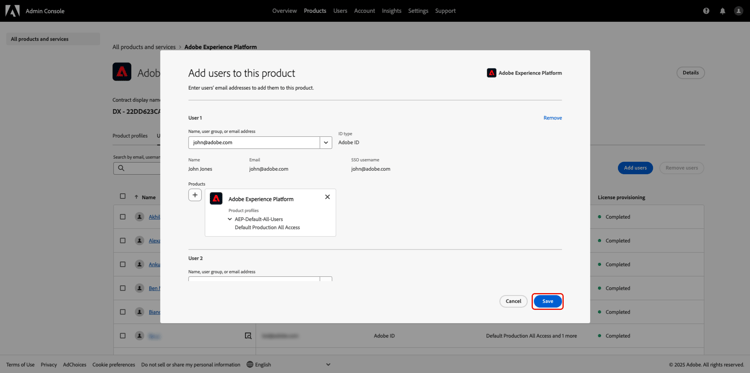
Confirm the information is correct and then select Save.
Ora l’utente deve disporre dell’accesso amministratore di prodotto e prodotto ad Experience Platform, per poter accedere alle Autorizzazioni. Successivamente, devi assegnare all’utente due ruoli fondamentali per consentirgli di accedere all’interfaccia utente di Experience Platform.
Amministratori: configurare l’accesso all’interfaccia utente di Experience Platform product-access
In Real-Time CDP Collaboration, gli amministratori e gli utenti finali lavoreranno con i dati provenienti da Experience Platform, ad esempio i tipi di pubblico e i registri di audit. Questi dati vengono conservati all’interno di istanze di Experience Platform denominate sandbox. Per garantire che gli utenti possano interagire con questi dati, devi assegnare ruoli predefiniti all’utente.
Per iniziare, passa a Adobe Experience Cloud. Dovresti trovare Experience Platform e Autorizzazioni all’interno di Accesso rapido.
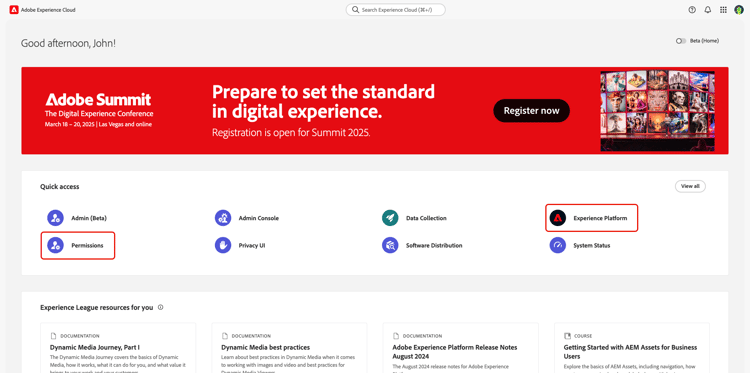
In questa fase, è ora possibile accedere a Autorizzazioni. Se tenti di accedere a Experience Platform, riceverai un avviso che informa che non sono abilitate sandbox, come mostrato di seguito. Per risolvere questo problema, devi assegnare i ruoli predefiniti al tuo utente. Per iniziare, seleziona Autorizzazioni.
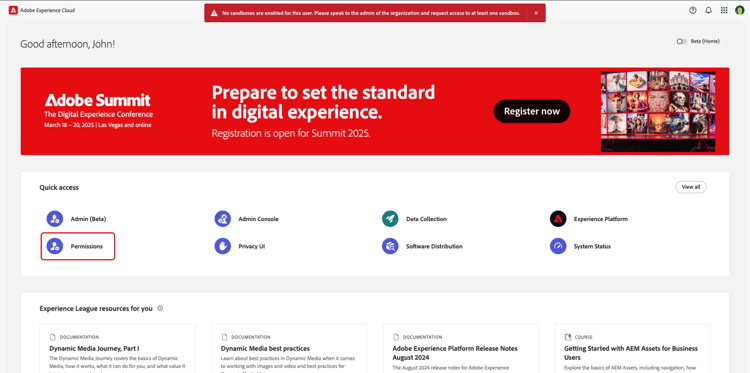
Verrà visualizzato il dashboard Autorizzazioni. Seleziona Utenti dal pannello a sinistra, quindi seleziona il nome dell’utente.
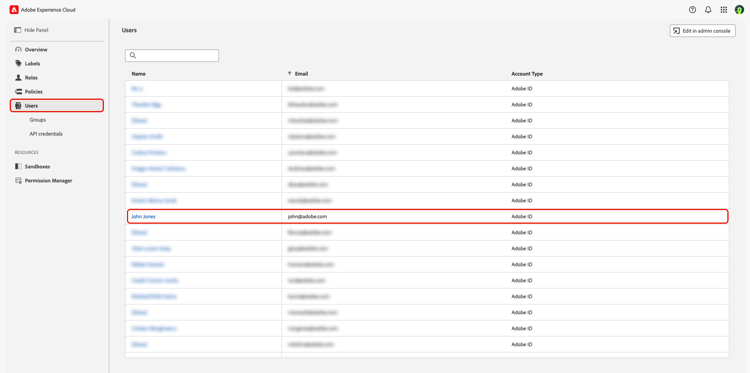
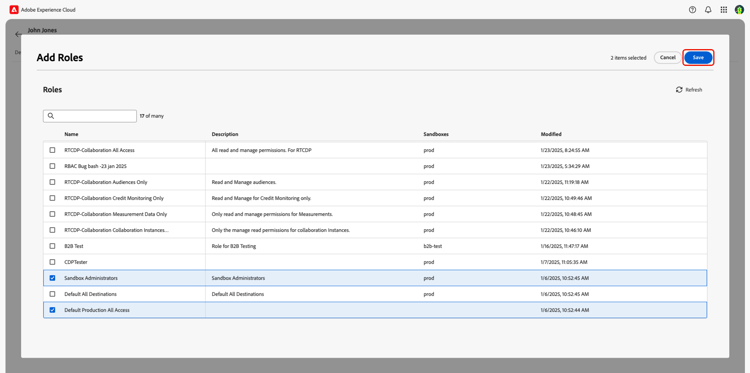
Selezionare la scheda Ruoli, quindi selezionare Aggiungi ruoli.
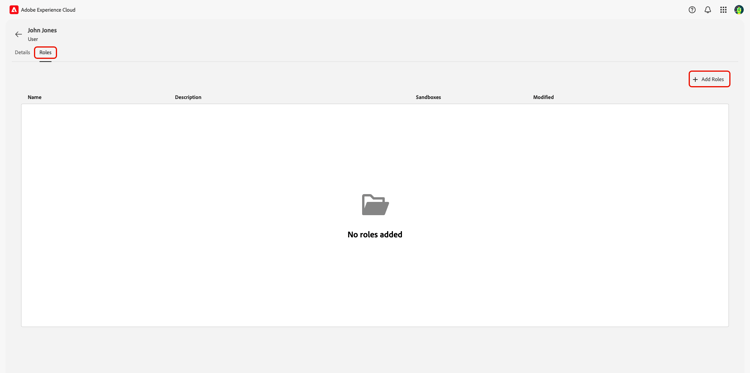
Viene visualizzata la finestra di dialogo Aggiungi ruoli. Seleziona Accesso predefinito a tutti i processi di produzione e Amministratori sandbox, quindi seleziona Salva.
You now have access to Experience Platform and Permissions. In the final step, you’ll grant access to Real-Time CDP Collaboration.
Amministratori: configurare l’accesso a Real-Time CDP Collaboration RTCDP-collaboration-access
To grant users access to Collaboration, you’ll use an access control concept called roles. Roles define the level of access a administrator or user has to resources in your organization.
When configuring individual access to Collaboration, you’ll assign users’ roles containing permissions from the Collaborations resource. You can use the manage roles guide to find out information on:
- the two standard roles and the levels of access they grant to Collaboration
- creating custom roles using the Collaboration resource
- the list of permissions included in the Collaborations resource
Once you’ve chosen or created a role that encompasses the level of access your user needs, you need to assign the user to that role.
Assign a role
You may assign multiple roles to a single user or assign multiple users to a single role. The first case was covered earlier when assigning the default roles to give a user access to Experience Platform. In the next steps, you’ll assign users directly to the role you’ve selected.
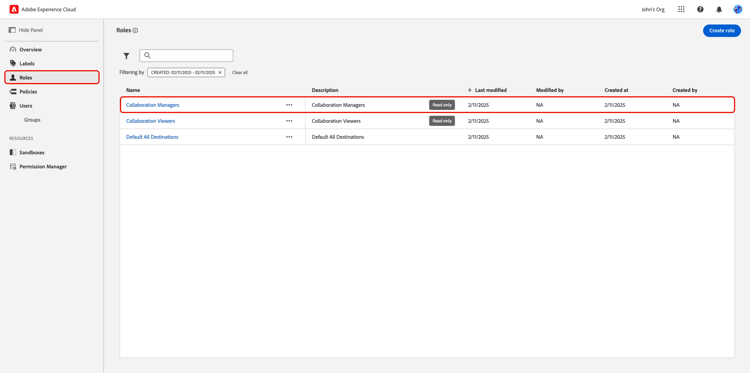
In Permissions select Roles from the left panel and then select your role from the list.
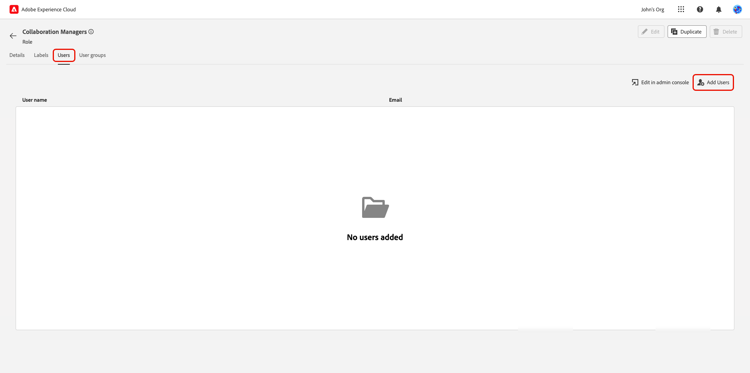
The role’s detail page displays. Select the Users tab and then select Add Users.
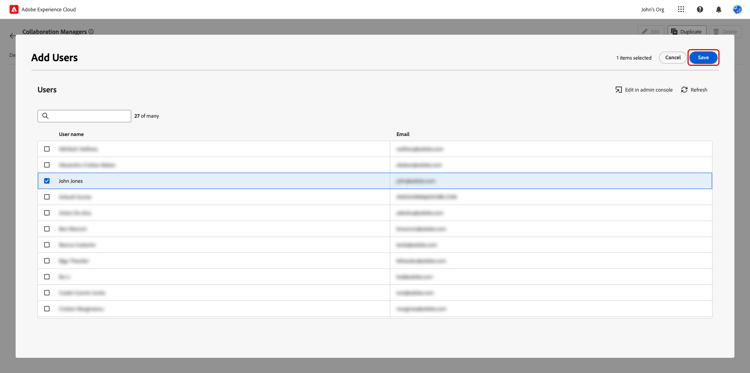
The Add Users dialog appears. Select the user(s) from the list and then select Save.
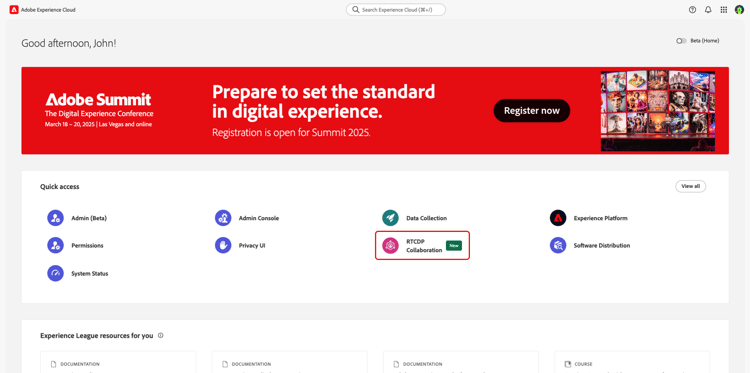
L’utente dovrebbe ora vedere RTCDP Collaboration elencato come prodotto in Accesso rapido in Experience Cloud.
Passaggi successivi
Ora che gli utenti hanno accesso a Real-Time CDP Collaboration, possono iniziare a utilizzare il prodotto. Per ulteriori informazioni sul prodotto nel suo complesso, consulta la guida alla panoramica.