Two admins, two very different companies—one shared mission: turning Workfront into the single, trusted place where work starts and stays. In this article, Qualcomm’s Becky Barus and Toll Brothers’ Kaylee Richard share how they moved from scattered tools and chaotic intake to unified, scalable Workfront ecosystems that adapt as requirements change.
Introduction
At Qualcomm, Becky Barus is the Workfront Technical Lead, responsible for process alignment, development, governance, training, and change management for a global marketing Workfront instance serving over 45,000 users. She directly manages 2,000 active users on this enterprise platform, showcasing how strong strategic leadership and technical expertise can drive organizational efficiency at scale.
At Toll Brothers, Kaylee Richard serves as Marketing Operations Manager, architecting and optimizing the Workfront ecosystem that powers hundreds of weekly website, creative, and digital asset requests. She drives process innovation across marketing, web, brand, and visualization teams by designing automations and implementing scalable solutions. By combining operational strategy with automation and AI-driven solutions, Kaylee transforms complex workflows into streamlined systems that enhance efficiency and support brand excellence at scale.
The companies couldn’t be more different, but their stories follow a similar path: they begin in chaos, but transition to designing standardized processes, centralizing work in Workfront, and continuing to iterate as requirements evolve.
What follows are their stories of how they made Workfront the one place where work starts.
From "no one knew where to submit work" to one unified system
Becky Barus, Workfront Technical Lead and System Administrator, Qualcomm
As Qualcomm Marketing's System Administrator, Workfront Technical Lead, and Product Owner, I operate as a strategic force of one. My scope encompasses process optimization, maintenance, governance, development, and adoption strategies for approximately 2,000 active users. I cover processes throughout the complete work lifecycle: from initial intake through final execution.
From intake confusion to a clear path
When I started, the organization lacked a unified system of record for work management and requests. Teams scattered across 10+ different project management tools, following inconsistent and undocumented processes, while users struggled to identify the appropriate channels and teams for work requests. My mission became clear: deploy a comprehensive Workfront instance that would serve as the organization's single source of truth.
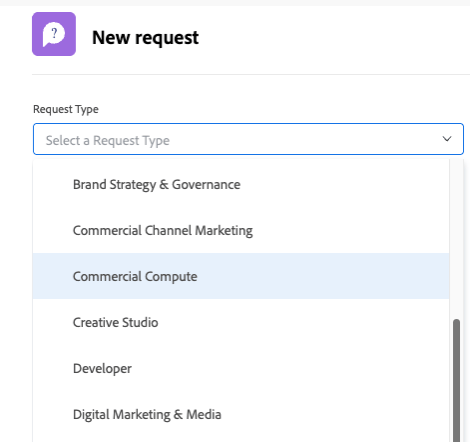
The team initially tested a function-based request queue architecture, but scale quickly revealed its limitations. The solution emerged through a team-centric structure with intuitive request type submenus, dramatically improving user navigation. Our implementation strategy embraced a phased rollout, onboarding teams incrementally. Most began with essential request types, then expanded and refined their workflows organically. The combination of dedicated power users and strong executive sponsorship proved instrumental in accelerating platform adoption.
The turning points in adoption
Adoption took off when users experienced the power of real-time collaboration. The platform's integrated approach, connecting comments, updates, and reporting in a unified ecosystem, delivered value that traditional spreadsheets and hallway chats couldn't match. Teams embraced the global enterprise tool, consolidating their entire workflows into one system. Innovation followed naturally, with creative applications emerging for tracking work, travel coordination and competitor events.
The resistance and the reality
Some people resisted because change can be hard and challenge our comfort zone. Others questioned the need for new tools when being so used to using legacy tools like Basecamp. And not everybody is tech savvy enough to learn the many things about a new tool, even at a tech leading company. Understanding user dynamics became critical and resistance often signaled deeper issues beyond interface familiarity, pointing to underlying process gaps.
For some teams, Workfront implementation exposed a fundamental truth: they lacked defined processes entirely. The platform forced essential conversations about workflow fundamentals before configuration could begin. This gap revealed a core principle: technology enables and optimizes processes, but it cannot architect them from scratch. The tool serves as the medium—process design remains human work.
Change is the only constant
Qualcomm's culture thrives on continuous transformation. Evolution necessitates ongoing refinement of processes and request queues, creating unique reporting challenges. While queue topic updates preserve system paths, historical reporting data doesn't follow. Working collaboratively with support, the teams engineered a calculated "queue topic override" field solution, enabling accurate historical reporting of structural changes.
Constant intake team transitions, combined with our Fusion-powered automatic routing, required us to establish a control project for workflow stability. Our creative studio exemplified adaptive design—they discovered that flexible, open-ended brief forms outperformed rigid questionnaires for creative requests, prompting a complete intake form redesign aligned with their workflow realities.
Why maintenance matters
Request queues evolve continuously. Teams pivot, priorities shift, and certain workflows fade into obsolescence. Rigorous usage monitoring provides essential intelligence for queue lifecycle management—identifying workflows for updates, optimization, or retirement. Team restructuring, agency partnerships, and role transition directly impact queue architecture and effectiveness. Proactive usage tracking enables strategic conversations with teams, helping them determine whether legacy processes should sunset or new workflows should launch.
Rethinking early decisions
Early on during rollout, Workfront architectural decisions required careful deliberation. We evaluated two execution models: task-based workflows with task forms versus request queue-driven processes. Our strategic choice reflected operational realities and team structures. Many teams lacked dedicated project managers for task assignment, necessitating solutions that worked without centralized resource allocation. Additionally, users rarely possessed complete information during initial submission, leading to our philosophy of quality over speed—encouraging complete requests rather than iterative form submission. This approach delivered unexpected benefits: our à la carte request queue model integrated seamlessly into project templates via the Requests tab, enabling teams to consolidate campaign or event-specific requests while maintaining flexible ad-hoc options.
The difference a unified system makes
The thing I’m most proud of is our significant transformation from fragmented tools and inconsistent processes to a unified digital enterprise platform where work ownership is universally understood. Our adoption metrics demonstrate consistent year-over-year growth across every dimension—active users, requests submitted and received, intake teams and request queue projects, and collaboration activity through comments and notes. This trajectory reflects not just tool adoption, but fundamental operational transformation.
Organizations often struggle with implementation starting points, but the success foundations remain straightforward: identify core processes, architect standardized request queues, and establish accurate reporting frameworks. The beauty of this approach lies in its flexibility—decisions can evolve as understanding deepens. This adaptability underscores why this work delivers lasting organizational value.
Putting all our work where it belongs — in Workfront
Kaylee Richard, Marketing Operations Manager, Toll Brothers
As Marketing Operations Manager and Workfront System Administrator at Toll Brothers, I architect and optimize the marketing work lifecycle end to end. I drive process design, efficiency, automation, and platform governance so everything flows through a single, scalable Workfront ecosystem.
Centralizing intake
About 99.5% of our data starts in a request queue. Everything someone needs to request flows into Workfront, and the form captures enough detail for the receiving team to complete the work. Because we don’t have traditional project managers, work is assigned directly to individuals or teams, each with its own dashboards and reports. The request queue eliminated the need for a trafficker—teams simply work from their queues.
Standardizing the creative workflow
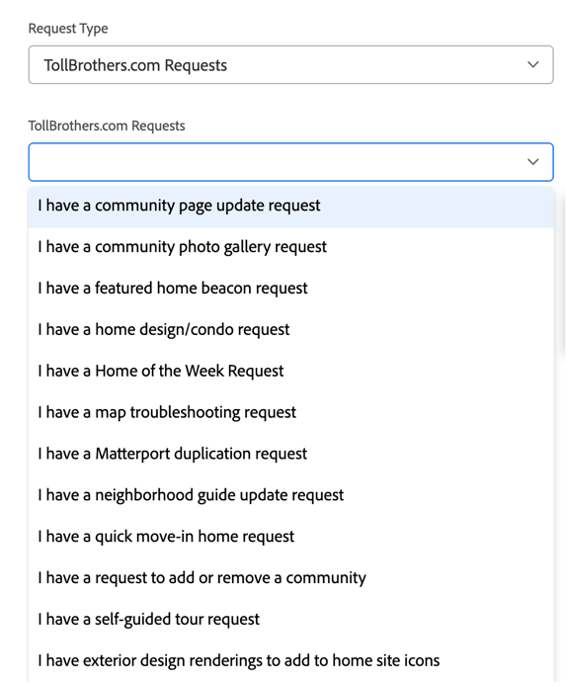
Toll Brothers relies heavily on visuals and brand consistency, so every community and every asset follows the same steps. Templates, dropdowns, and custom forms ensure that even with 1,000+ weekly website update requests, everything stays organized and aligned.
Why Workfront became essential
Workfront came in around 2019–2020 to centralize tollbrothers.com requests. We onboarded teams gradually, and by 2022 most of marketing was fully using it. Having a single system to standardize fields and processes became non‑negotiable given the volume we manage.
Removing the last barriers
Two teams stayed outside Workfront because they used other request management tools for billing requirements. Once we showed them Workfront could deliver the same reporting, they moved in. Their productivity increased immediately—no more buried email threads.
Adjusting as requirements change
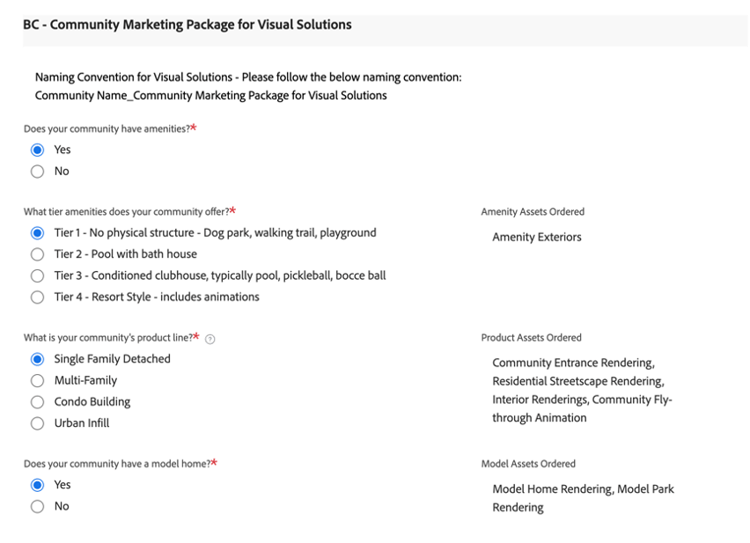
Our environment shifts quickly. While building out a new process for our Visualization team, leadership decided they wanted to pivot and roll out a "community packages" approach. We had to rethink the entire request form and workflow that originally only allowed for 1 solution to be ordered, now needed to be able to request up to 15 solutions at once. Every new implementation teaches us something new and helps us improve older workflows.
Time saved as the primary metric
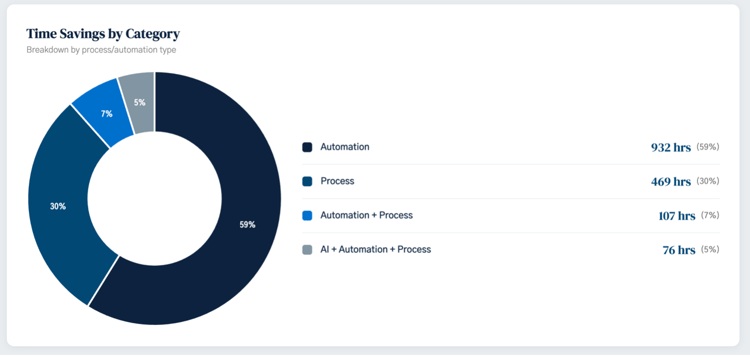
Time saved is the metric we track most. Whether through AI, automation, or better processes, even 1-minute savings per request adds up when you are operating at such a high volume. Automating small steps—like triggering emails of status changes or automating task assignments—continues to reclaim time across teams. In fiscal year 2025, we saved 1,584 hours across 32 implemented processes and automations.
Imagination leads to better solutions
During process design, pushing teams to imagine their ideal workflow often reveals solutions we can actually build. Cross‑team collaboration is key because understanding what’s possible unlocks more creative thinking.
Planning up front saves time later
Mapping everything before building ensures forms and workflows match how teams truly operate. Workfront adapts to different teams, but planning is what makes it work.
Workfront as a source of truth
If the work can be done in Workfront, it belongs in Workfront. Relying on spreadsheets or other external tools to manage requests and workflows creates gaps and inconsistencies. The system is built to support the entire process—use it as intended.
Resources: