This article looks at building sustainable Workfront adoption by aligning people, process, and system design into a framework that's flexible enough for different skill levels while still maintaining governance. The result is a more efficient, collaborative, and visible marketing ecosystem that connects strategy to execution.
Overview
When we talk about scaling marketing operations, technology is a critical part of the conversation. In our experience within enterprise marketing organizations, the most successful outcomes happen when that technology is paired with strong alignment across people and processes.
Enterprise work management platforms play a central role in modern marketing operations providing structure for planning, execution, and reporting across multiple teams. As organizations grow, so does the opportunity to bring teams into a connected environment in a way that strengthens what’s already working while supporting a wide range of skillsets, working styles, and levels of maturity across marketing.
That was our focus as we brought a newly acquired business unit into an existing shared workflow environment.
Rather than reworking how teams delivered, we saw an opportunity to connect and elevate their workflows bringing them into a unified system that supports visibility, governance, and scale.
Seeing the opportunity clearly
What we stepped into will feel familiar to many practitioners: highly skilled teams with strong functional processes, delivering excellent work within their own domains.
The opportunity wasn’t to improve the work itself it was to make that work more connected.
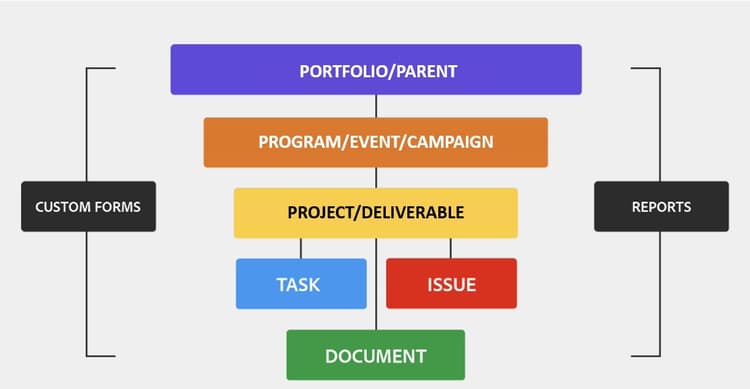
We wanted to move from a world where deliverables were managed individually to one where campaigns could be understood end-to-end. Not as separate pieces, but as a complete system visible, measurable, and aligned to outcomes.
A simple, shared vision
We anchored everything to a straightforward idea: One connected workflow for the full campaign lifecycle.
In practice, that meant creating an environment where:
-
Intake is simple and intuitive
-
Campaigns are structured consistently
-
Roles and handoffs are clear
-
Work is visible across teams
-
Reporting reflects the full picture
It was about creating a structure that enables great work to scale more seamlessly and consistently.
Just as important, the system needed to work for everyone from highly technical users to occasional requesters. Designing for that range meant creating a model that could flex to different needs, while still reinforcing consistency where it matters most. That balance between flexibility and standardization continues to shape how the platform evolves.
Starting where it matters
Before configuring anything, we spent time aligning the bigger picture.
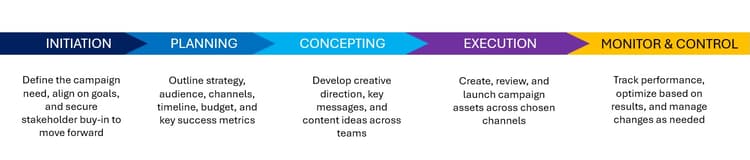
That included defining how we think about:
-
Campaign structures and portfolios
-
User roles and responsibilities
-
Intake and workflow design
-
Templates, governance, and reporting
-
Training and ongoing enablement
This step is easy to underestimate, but it’s where adoption is really shaped. When teams can see how everything connects, the system becomes something they recognize, not something they have to adapt to.
It also gave us the opportunity to design a diverse user base from the start. Marketing organizations rarely operate at a single level of process or system maturity, so the solution needed to meet teams where they are while still guiding them toward a more connected, scalable way of working.
People, process, then system
One principle guided every decision we made: People first, process second, system third.
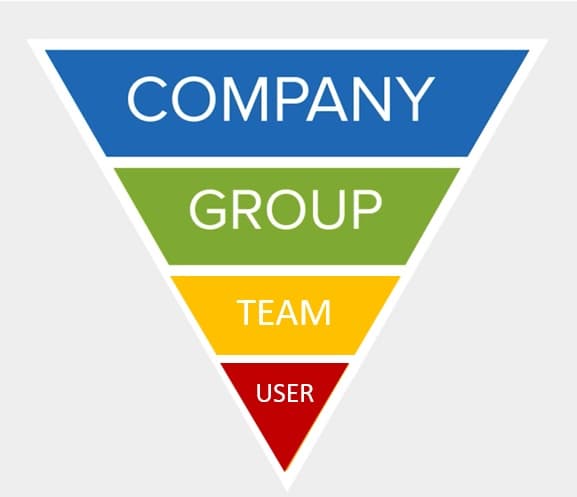
We defined personas across the organization from system administrators to requesters along with the teams that would operate within the system. Just as importantly, those teams helped shape how the system would work, ensuring the design reflected real workflows and real needs.
That collaboration was carried forward into process design. Through working sessions and training, teams stepped back and began to see their work as part of a broader campaign lifecycle. For many, that shift included both building confidence in the platform and gaining a clearer understanding of how their work fits into a connected model.
We also recognized that not every team would engage with the system in the same way or at the same depth. Designing with that in mind allowed for approachable entry points, while still supporting more advanced use cases as teams grow into the platform.
Only after that did system configuration begin. By that point, the platform reflected how teams wanted to operate, rather than forcing new ways of working.
Building for scale
As the system took shape, we translated alignment into scalable structures.
A library of templates was developed to support a wide range of work from campaign programs and ABM initiatives to creative production and channel execution. Each template reflects real workflows, helping make adoption intuitive and repeatable across teams.
At the same time, integrations were approached thoughtfully. Using automation and integration capabilities, efforts focused first on stabilizing core processes, then extending outward into the broader marketing technology ecosystem, including enterprise marketing and collaboration tools.
Taking an iterative approach here has been key. Rather than connecting everything at once, the system evolved alongside how teams actually use it.
Flexibility and standardization are often seen as competing priorities, but they tend to work best together. Allowing thoughtful customization within a consistent framework supports different team needs while still enabling reporting, governance, and long-term scalability.
Connecting strategy to execution
One of the key milestones in this journey has been aligning workflow systems to the buyer journey.
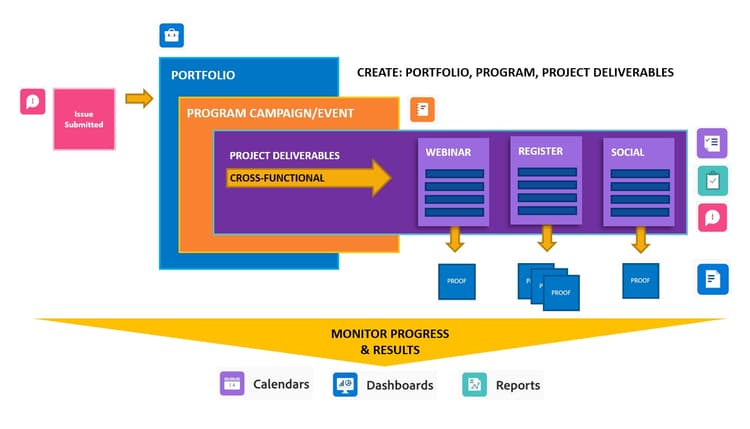
With centralized planning capabilities, a structure was established that connects:
-
Strategic campaign planning
-
Program execution
-
Individual deliverables
This alignment gives teams and leaders a shared view connecting strategy, execution, and outcomes in a way that is both practical and actionable.
When it comes together
As the system matured, it provided a clear view of how this model works in practice.
Teams can see an entire campaign in one place: the central program, key deliverables, and all supporting work connected within a shared structure.
This goes beyond visibility it creates clarity, making it easier to understand how everything fits together and to quickly find the work that matters.
Simplifying the front door
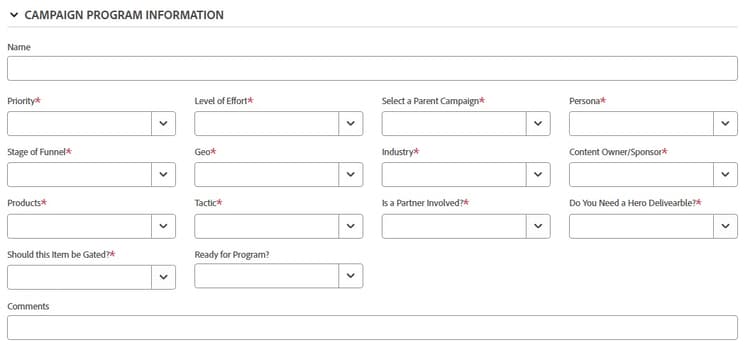
One of the key changes we made was rethinking intake.
We focused on a simple principle: Capture what’s needed to start and let the system build from there.
By consolidating numerous intake forms into a single, streamlined entry point, a more approachable experience was created. Behind the scenes, automation helps manage the complexity generating structures, aligning work, and allowing teams to move forward with less friction.
This balance between simplicity and structure has been essential to supporting adoption at scale.
Enabling confidence at scale
Adoption is an ongoing journey that evolves over time as teams build familiarity and confidence.
A key part of that journey has been creating clear, accessible documentation and embedding it directly into the system experience. When users can find answers in context, they’re able to build confidence more quickly and work more independently.
Supporting a range of users from those deeply embedded in the system to those who engage more occasionally benefits from clarity and consistency. As those elements come together, trust grows and adoption continues to strengthen.
A partnership that scales
This work has been shaped by strong partnership bringing together strategic design and technical execution in a way that keeps both aligned.
That balance supports forward momentum while ensuring the system continues to scale effectively. It also helps ensure that as the platform evolves, it remains grounded in how teams actually work and what they need to be successful.
What we’re continuing to build
This implementation serves as a strong foundation for continued growth.
As organizations expand and evolve, so do their workflows. Continuing to refine processes, extend integrations, and explore new capabilities is part of maintaining a healthy system.
Like any mature marketing operations environment, this work is a continuous evolution simplifying where possible, scaling where needed, and adapting as teams grow into new ways of working. Maintaining that mindset helps sustain both momentum and long-term value.
We’re also committed to sharing what we’ve learned with the broader community. Many organizations are navigating similar journeys, and there is real value in learning from one another along the way.