Implementation architecture options
Adobe Commerce implementation architectures combine three layers: a commerce backend (Adobe Commerce or Adobe Commerce Optimizer), a storefront, and a set of connected services and integrations. Compare the following options to identify which system owns catalog, pricing, cart, checkout, orders, and customer transactions in each architecture.
Architecture options summary
Compare the options by transaction ownership and by storefront experience.
Commerce platform and transactions
Storefront experience
Storefronts connect to Commerce Foundation APIs, Storefront Services (Catalog Service, Live Search, and Product Recommendations), or Adobe Commerce Optimizer Merchandising Services.
Adobe Commerce as a Cloud Service
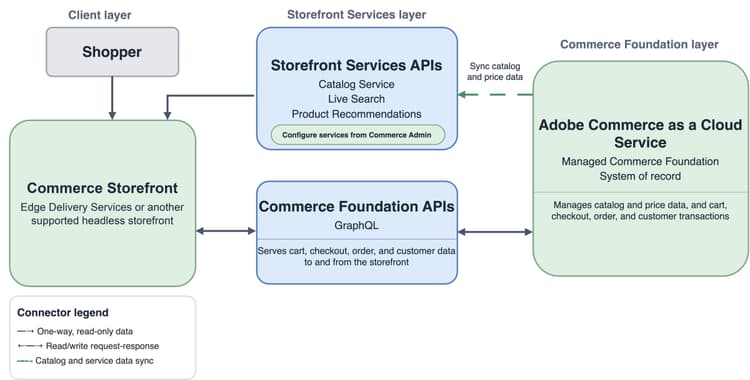
Key boundary—Adobe manages the Commerce Foundation platform. The architecture uses Storefront Services, including Catalog Service, Live Search, and Product Recommendations, for storefront experiences. Product Visuals powered by AEM Assets is an optional SaaS integration. See AEM Assets integration for Commerce.
References:
Adobe Commerce with Commerce Foundation
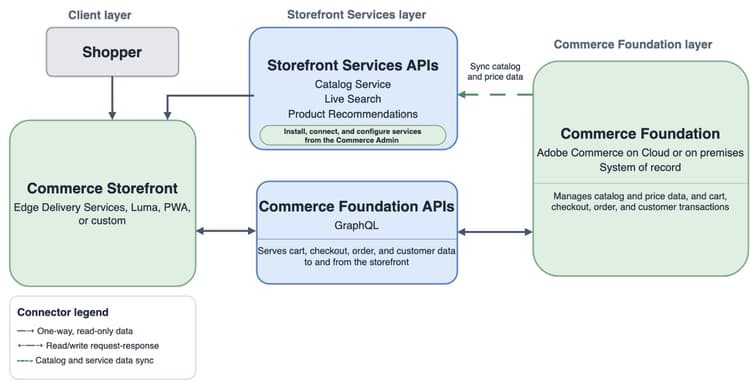
Key boundary—Commerce Foundation owns the Commerce platform and transaction flows. Catalog Service, Live Search, and Product Recommendations provide optimized storefront access to catalog, search, and recommendations when configured. AEM Assets integration is optional. See AEM Assets integration for Commerce.
References:
Adobe Commerce with the Optimizer Connector
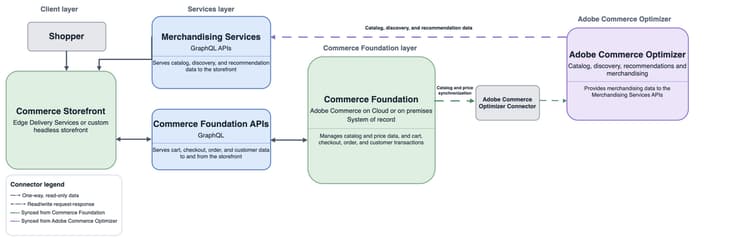
Key boundary—The Connector synchronizes catalog and price data from Adobe Commerce to Adobe Commerce Optimizer. Adobe Commerce remains the transaction system, while Optimizer supplies discovery and merchandising experiences through its Merchandising Services APIs.
References:
Stand-alone Commerce Optimizer with a third-party backend
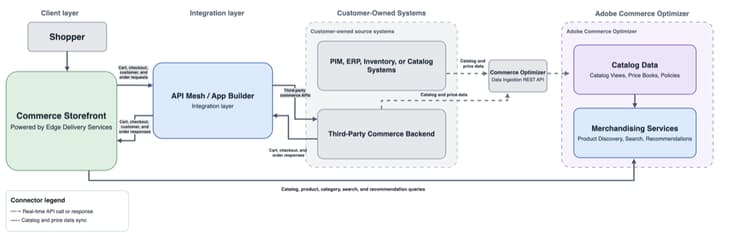
Key boundary—Stand-alone Adobe Commerce Optimizer owns catalog discovery and merchandising experiences, but not the transactional Commerce backend. Catalog and price data enter through the Data Ingestion REST API. The Edge Delivery Services storefront uses Merchandising Services GraphQL APIs for product experiences and connects to the third-party backend for cart and checkout.
References: