Verwenden Sie Workfront Fusion, um ein Workfront-Problem in ein Projekt mit Adobe Experience Manager-Workflows zu konvertieren
Wenn Sie ein Projekt über Workfront Fusion erstellen und Adobe Experience Manager-Workflows in das Projekt aufnehmen möchten, müssen Sie eine bestimmte Fusion-Modulkonfiguration verwenden, die in diesem Artikel beschrieben wird.
Diese Funktion ist im Bereich Neue Dokumente nicht verfügbar.
Zugriffsanforderungen
| table 0-row-2 1-row-2 2-row-2 3-row-2 html-authored no-header | |
|---|---|
| Adobe Workfront-Paket |
Ein beliebiges Adobe Workfront Workflow- und Adobe Workfront Automation and Integration-Paket Workfront Ultimate Workfront Prime- und Select-Pakete bei zusätzlichem Kauf von Workfront Fusion. |
| Adobe Workfront-Lizenzen |
Mitwirkende oder höher Anfragende oder höher |
| Produkt |
Adobe Experience Manager:
Workfront Fusion:
|
| Konfigurationen der Zugriffsebene | Zugriffrecht „Bearbeiten“ für Dokumente |
Voraussetzungen
Bevor Sie beginnen,
-
Ihr Workfront-Administrator muss Workflows in einer Adobe Experience Manager-Integration konfigurieren. Weitere Informationen finden Sie unter Konfigurieren der Experience Manager Assets as a Cloud Service-Integration.
-
Sie müssen über eine Projektvorlage verfügen, die mit einem Workflow für verknüpfte Ordner der Adobe Experience Manager-Integration konfiguriert ist.
-
Sie müssen eine OAuth-Anwendung in Workfront erstellt haben, um die Verbindung für dieses Modul zu konfigurieren.
Anweisungen finden Sie unter Erstellen einer OAuthAnwendung) in diesem Artikel.
Modulkonfiguration
Wenn Sie in Workfront Fusion ein Projekt erstellen möchten, das Adobe Experience Manager-Workflows enthält, müssen Sie das Aktionsmodul Workfront > Sonstige verwenden.
-
Fügen Sie das Modul > Misc Action zu Ihrem Szenario hinzu.
-
Wählen Sie im Verbindung die Workfront-Verbindung aus, die eine Verbindung zu dem Konto herstellt, das dieses Modul verwenden wird.
Anweisungen zum Erstellen einer Verbindung finden Sie unter Verbinden Workfront mit Workfront Fusion im Artikel Workfront-Module.
Anweisungen zum Erstellen der Client-ID und des Client-Geheimnisses, das Sie benötigen, um eine Verbindung zu erstellen, finden unter „Erstellen einer OAuthAnwendung“ in diesem Artikel.
-
Wählen Sie Feld Datensatztyp“
Issueaus. -
Wählen Sie im Aktion die Option
convertToProjectaus. -
Geben Sie Feld ID“ die ID des Problems ein, das Sie in ein Projekt konvertieren, oder ordnen Sie sie zu.
-
Aktivieren Erweiterte Einstellungen anzeigen.
-
Scrollen Sie zum unteren Rand des Moduls und suchen Sie das Feld Projekt (Erweiterte Sammlung .
-
Fügen Sie den folgenden Text in das Feld Projekt (Erweiterte Sammlung) ein.
code language-none { "aemNativeFolderTreeIDs": ["Folder Tree ID here"], "aemNativeFolderWorkflowEnabled": "true", "name": "New project name here", "templateID": "Template ID here" } -
Ersetzen Sie
Folder tree ID heredurch die Ordner-IDs.Informationen zum Auffinden von Ordnerbaum-IDs finden Sie unter Suchen von -IDs“ in diesem Artikel.
Um mehr als eine Ordnerstruktur zu verwenden, trennen Sie IDs durch ein Komma:
"aemNativeFolderTreeIDs": ["Folder tree ID here","Second folder tree ID here"], -
Ersetzen Sie
New project name heredurch den Namen, den das neue Projekt haben wird. -
Ersetzen Sie
Template ID heredurch die ID der Vorlage, die Sie für das neue Projekt verwenden.Sie können die Vorlagen-ID aus einem vorherigen Modul zuordnen (z. B. einem Workfront > Suchmodul) oder sie in der URL der Vorlagenseite in Workfront suchen.
-
Klicken Sie OK, um die Modulkonfiguration zu speichern.
IDs der Ordnerstruktur suchen
So suchen Sie die IDs der Ordnerstruktur:
-
Öffnen Sie in Workfront die Vorlage, die Sie für dieses Projekt verwenden möchten. Diese Vorlage muss die Adobe Experience Manager-Konfiguration enthalten, die Sie für das Projekt verwenden möchten.
-
Öffnen Sie die Entwickler-Tools für Ihren Browser.
-
Öffnen Sie die Netzwerk in den Entwickler-Tools.
-
Geben Sie Feld Filter“
object-workflowein. -
Klicken Sie in der Spalte Name auf die alphanumerische ID, die angezeigt wird.
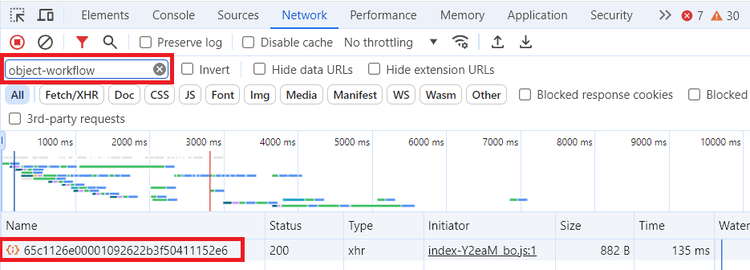
-
Klicken Sie auf Vorschau rechts neben der alphanumerischen ID.
-
Öffnen Sie die folgenden reduzierten Abschnitte:
dataobjectWorkflowworkflowsenhancedLinkedFolderCreationWorkflowenhancedLinkedFolderCreationWorkflowConfigurations
Jede Ordnerstruktur wird durch eine Zahl dargestellt. 0 (Null) steht für den ersten Ordner in der Liste, 1 steht für den zweiten Ordner usw. Wenn die Vorlage nur eine Ordnerstruktur enthält, ist dies die Zahl 0.
-
Öffnen Sie die Ordnerstruktur, die Sie für das neue Projekt verwenden möchten. Notieren Sie sich den Wert des
_id. Wenn Sie mehr als eine Ordnerstruktur verwenden möchten, notieren Sie sich alle_idFeldwerte für die Ordnerbäume, die Sie verwenden möchten.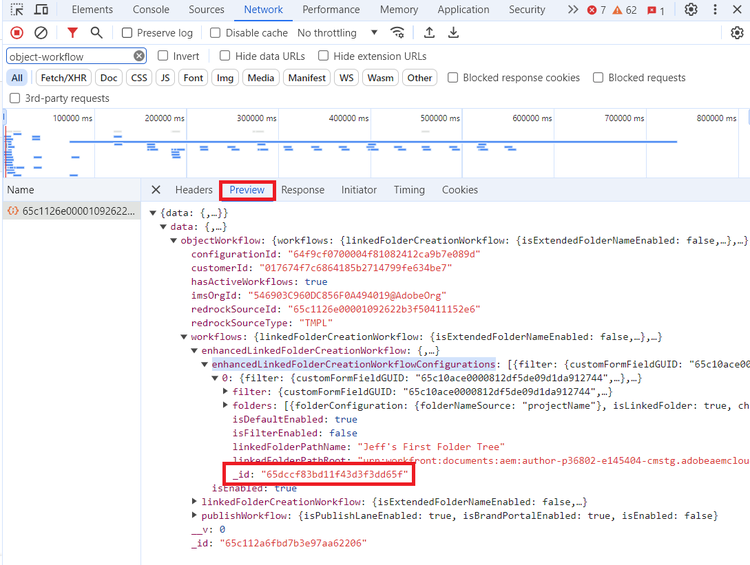
Dies sind die
aemNativeFolderTreeIDsWerte, die Sie in das Feld Projekt (Erweiterte Sammlung) im Modul Workfront > Misc Actions eingeben.
Erstellen einer OAuth-Anwendung
Für die Verbindung dieses Moduls müssen Sie in Workfront eine OAuth-Anwendung einrichten. Sie müssen dies nur einmal für eine bestimmte Workfront-Verbindung in Fusion tun.
-
Beginnen Sie in Workfront mit der Erstellung einer OAuth-Anwendung, wie beschrieben unter Erstellen einer OAuth2-Anwendung mit Benutzeranmeldeinformationen (Autorisierungs-Code-Fluss) im Artikel Erstellen von OAuth2-Anwendungen für Workfront Integrationen.
-
Kopieren Sie die Client-ID und den geheimen Client-Schlüssel an einen sicheren Speicherort.
-
Geben Sie Feld Umleitungs-URIs“ Folgendes ein:
code language-none http://app.workfrontfusion.com/oauth/cb/workfront-workfront -
Klicken Sie auf Speichern.
Diese Client-ID und dieses Client-Geheimnis werden beim Konfigurieren der Verbindung des Moduls in Fusion verwendet.
Anweisungen zum Erstellen einer Verbindung finden Sie unter Verbinden Workfront mit Workfront Fusion im Artikel Workfront-Module.
Fehlerbehebung
Problem: Benutzerdefinierte Formulare werden unerwartet an das von Fusion erstellte Projekt angehängt
Problemumgehung:
Verschieben Sie categoryID aus der erweiterten Projekt-JSON in project_new.categoryID (mithilfe des strukturierten Felds in der Fusion-Benutzeroberfläche).
Ändern Sie den Mapper konkret in:
// project_new — set just this one field via the structured UI
{
    "categoryID": "5d3a292300b69eb5d80c37e8ce6269d3"
}
// project (advanced JSON) — remove categoryID from here
{
    "aemNativeFolderTreeIDs": ["693c40280e09eb1bd4085a5e"],
    "aemNativeFolderWorkflowEnabled": "true",
    "name": "{{1.name}}",
    "templateID": "{{if(...)}}",
    "ownerID": "{{1.ownerID}}",
    "sponsorID": "{{1.ownerID}}",
    "priority": "2",
    "programID": "{{ifempty(7.ID; null)}}",
    "description": "test",
    "portfolioID": "{{ifempty(8.ID; null)}}",
    "scheduleMode": "S",
    "completionType": "AUT"
}
Warum funktioniert das:
isCtgyIDsGiven sieht nun,project_new.categoryID = "5d3a292300b69eb5d80c37e8ce6269d3"→ wahrhaftige →temp.isCtgyIDsGiven = truezurückgibt- Schritt (
getAttachedAndAttachableCategoryID) wird übersprungen - Zustand!temp.isCtgyIDsGiven - Stattdessen wird dieser Schritt ausgelöst:
ctgyIds = split(parameters.project_new.categoryID, ',')→ [„5d3a292300b69eb5d80c37e8ce6269d3“] prepareMiscActionDataverwendet weiterhin die erweiterte Projekt-JSON für alle AEM-spezifischen Felder (es hat Vorrang vorproject_new) und überlagert dannobjectCategories: [{ categoryID: "5d3a292300b69eb5d80c37e8ce6269d3" }], nur die beabsichtigte Form, keine unerwarteten- Die Schritte zum Kopieren benutzerdefinierter Feldwerte aus der OPTASK-Quelle in das neue Projekt werden mit
isCopyCustomData: trueweiterhin wie erwartet ausgeführt
Die AEM-Felder (aemNativeFolderTreeIDs, aemNativeFolderWorkflowEnabled) bleiben unberührt im erweiterten Feld. Dieser Prozess ändert sich nur dort, wo categoryID gefunden wird.