擴充核心元件 extend-component
瞭解如何擴充要與AEM SPA Editor搭配使用的現有核心元件。 瞭解如何擴充現有元件是一項強大的技術,可自訂和擴充AEM SPA Editor實作的功能。
目標
- 使用其他屬性和內容擴充現有的核心元件。
- 瞭解使用
sling:resourceSuperType的元件繼承基本知識。 - 瞭解如何為Sling模型使用委派模式以重複使用現有邏輯和功能。
您將要建置的內容
在本章中,已建立新的Card元件。 Card元件會擴充影像核心元件,新增其他內容欄位,例如「標題」和「Call to action」按鈕,以針對SPA內的其他內容執行Teaser角色。

先決條件
檢閱設定本機開發環境所需的工具與指示。
取得程式碼
-
透過Git下載本教學課程的起點:
code language-shell $ git clone git@github.com:adobe/aem-guides-wknd-spa.git $ cd aem-guides-wknd-spa $ git checkout Angular/extend-component-start -
使用Maven將程式碼庫部署到本機AEM執行個體:
code language-shell $ mvn clean install -PautoInstallSinglePackage如果使用AEM 6.x,請新增
classic設定檔:code language-shell $ mvn clean install -PautoInstallSinglePackage -Pclassic -
安裝傳統WKND參考站台的完成套件。 由WKND參考網站提供的影像會在WKND SPA上重複使用。 可以使用AEM的封裝管理員來安裝封裝。
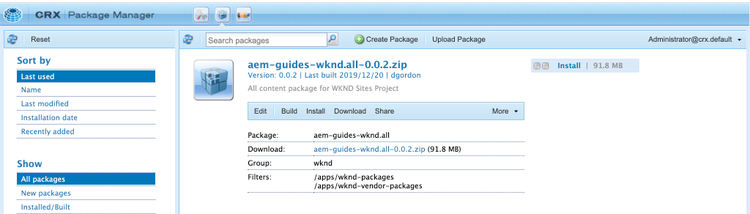
您隨時可以在 GitHub 上檢視完成的程式碼,或透過切換到分支 Angular/extend-component-solution 在本機查看程式碼。
檢查初始卡片實施
章節起始程式碼已提供初始卡片元件。 檢查卡片實作的起點。
-
在您選擇的IDE中,開啟
ui.apps模組。 -
瀏覽至
ui.apps/src/main/content/jcr_root/apps/wknd-spa-angular/components/card並檢視.content.xml檔案。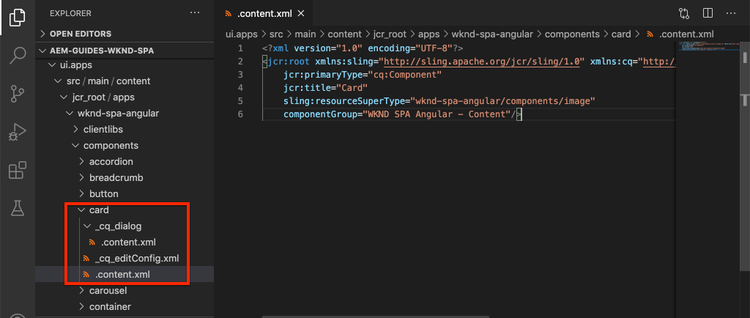
code language-xml <?xml version="1.0" encoding="UTF-8"?> <jcr:root xmlns:sling="http://sling.apache.org/jcr/sling/1.0" xmlns:cq="http://www.day.com/jcr/cq/1.0" xmlns:jcr="http://www.jcp.org/jcr/1.0" jcr:primaryType="cq:Component" jcr:title="Card" sling:resourceSuperType="wknd-spa-angular/components/image" componentGroup="WKND SPA Angular - Content"/>屬性
sling:resourceSuperType指向wknd-spa-angular/components/image,表示Card元件繼承了WKND SPA影像元件的功能。 -
檢查檔案
ui.apps/src/main/content/jcr_root/apps/wknd-spa-angular/components/image/.content.xml:code language-xml <?xml version="1.0" encoding="UTF-8"?> <jcr:root xmlns:sling="http://sling.apache.org/jcr/sling/1.0" xmlns:cq="http://www.day.com/jcr/cq/1.0" xmlns:jcr="http://www.jcp.org/jcr/1.0" jcr:primaryType="cq:Component" jcr:title="Image" sling:resourceSuperType="core/wcm/components/image/v2/image" componentGroup="WKND SPA Angular - Content"/>請注意,
sling:resourceSuperType指向core/wcm/components/image/v2/image。 這表示WKND SPA影像元件繼承了核心元件影像的功能。也稱為Proxy模式 Sling資源繼承是一種強大的設計模式,可讓子元件繼承功能並在需要時擴充/覆寫行為。 Sling繼承支援多個層級的繼承,所以新
Card元件最終會繼承核心元件影像的功能。許多開發團隊都會努力做到自我(請勿重複這點)。 Sling繼承可讓AEM實現此目標。
-
在
card資料夾下,開啟檔案_cq_dialog/.content.xml。此檔案是
Card元件的元件對話方塊定義。 如果使用Sling繼承,則可以使用Sling資源合併器的功能來覆寫或擴充對話方塊的部分。 在此範例中,對話方塊中已新增索引標籤,以從作者擷取其他資料並填入卡片元件。sling:orderBefore之類的屬性可讓開發人員選擇插入新標籤或表單欄位的位置。 在此情況下,Text索引標籤會插入asset索引標籤之前。 若要充分利用Sling Resource Merger,請務必瞭解影像元件對話方塊的原始對話方塊節點結構。 -
在
card資料夾下,開啟檔案_cq_editConfig.xml。 此檔案會指定AEM編寫UI中的拖放行為。 擴充影像元件時,資源型別必須符合元件本身。 檢閱<parameters>節點:code language-xml <parameters jcr:primaryType="nt:unstructured" sling:resourceType="wknd-spa-angular/components/card" imageCrop="" imageMap="" imageRotate=""/>大部分元件不需要
cq:editConfig,影像和影像元件的子系下階是例外。 -
在IDE切換至
ui.frontend模組,瀏覽至ui.frontend/src/app/components/card: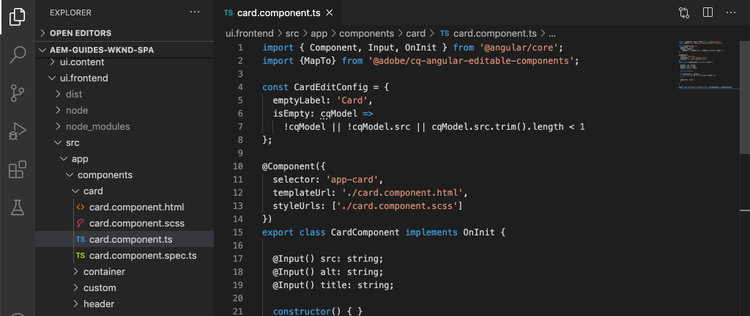
-
檢查檔案
card.component.ts。元件已經使用標準
MapTo函式截斷,以對應至AEMCard元件。code language-js MapTo('wknd-spa-angular/components/card')(CardComponent, CardEditConfig);檢閱類別中
src、alt和title的三個@Input引數。 這些是AEM元件中對應至Angular元件的預期JSON值。 -
開啟檔案
card.component.html:code language-html <div class="card" *ngIf="hasContent"> <app-image class="card__image" [src]="src" [alt]="alt" [title]="title"></app-image> </div>在此範例中,我們選擇從
card.component.ts傳遞@Input引數,以重複使用現有的Angular影像元件app-image。 在稍後的教學課程中,會新增並顯示其他屬性。
更新範本原則
使用此初始Card實作,檢閱AEM SPA編輯器中的功能。 若要檢視初始Card元件,需要更新範本原則。
-
將入門程式碼部署到AEM的本機執行個體(如果尚未部署):
code language-shell $ cd aem-guides-wknd-spa $ mvn clean install -PautoInstallSinglePackage -
更新配置容器的原則以將新的
Card元件新增為允許的元件: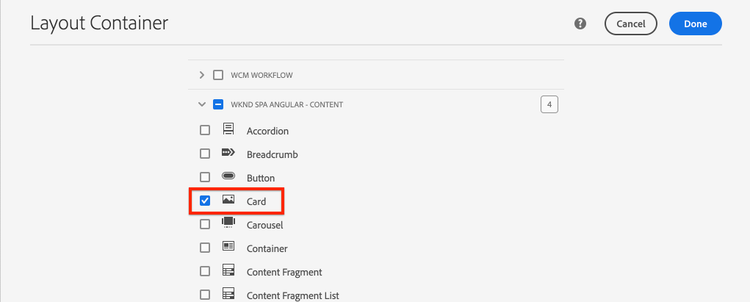
儲存原則的變更,並將
Card元件視為允許的元件: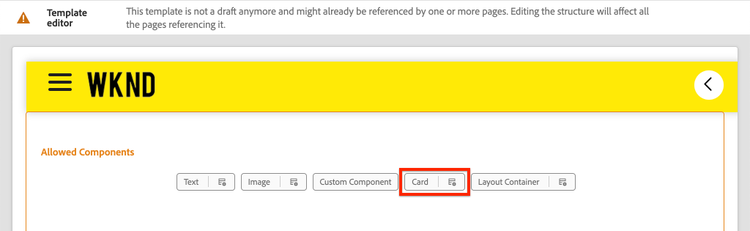
作者初始卡片元件
接下來,使用AEM SPA編輯器編寫Card元件。
-
導覽至http://localhost:4502/editor.html/content/wknd-spa-angular/us/en/home.html。
-
在
Edit模式中,將Card元件新增至Layout Container: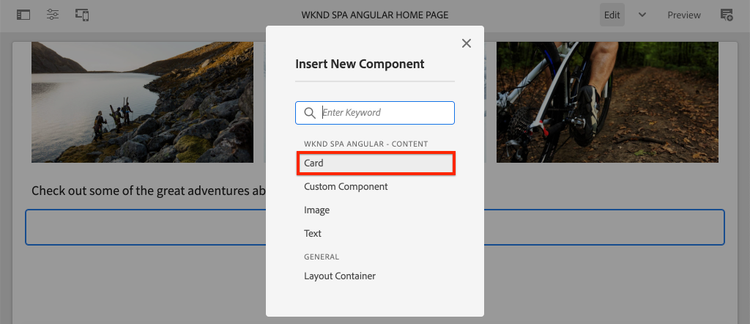
-
將影像從資產尋找器拖放至
Card元件上: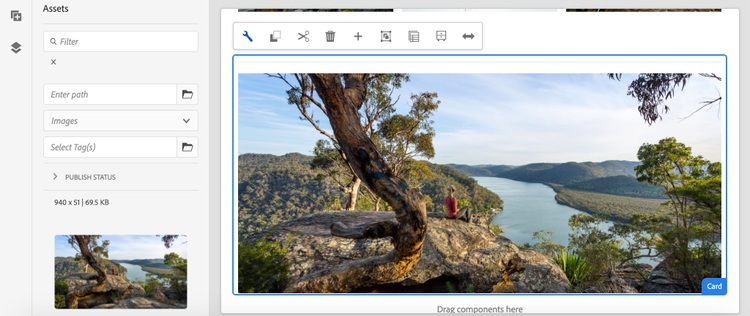
-
開啟
Card元件對話方塊並注意已新增 文字 索引標籤。 -
在 文字 索引標籤上輸入下列值:
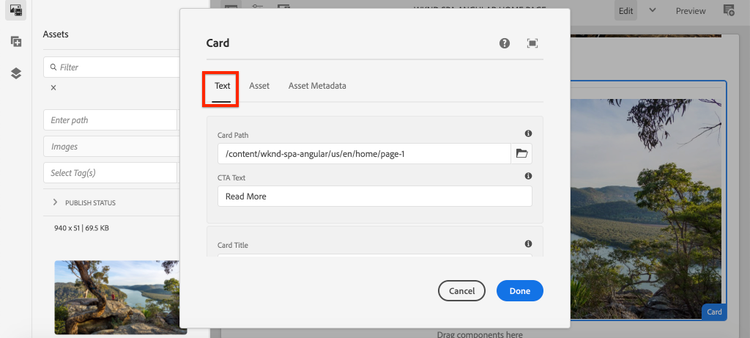
卡片路徑 — 在SPA首頁下方選擇頁面。
CTA文字 - 「瞭解詳情」
卡片標題 — 留空
從連結的頁面取得標題 — 勾選核取方塊以表示True。
-
更新 資產中繼資料 索引標籤以新增 替代文字 和 標題 的值。
更新對話方塊後,目前沒有其他變更顯示。 若要將新欄位公開給Angular元件,我們需要更新
Card元件的Sling模型。 -
開啟新索引標籤並導覽至CRXDE-Lite。 檢查
/content/wknd-spa-angular/us/en/home/jcr:content/root/responsivegrid下的內容節點以尋找Card元件內容。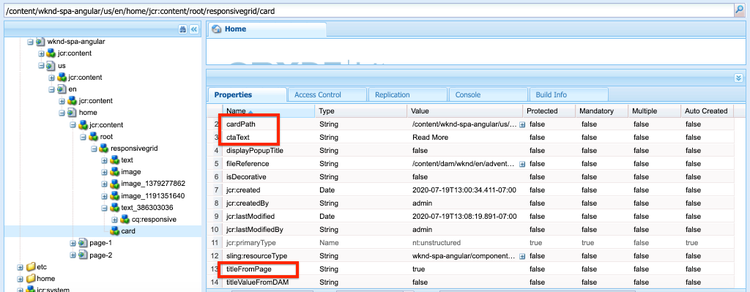
觀察對話方塊是否持續儲存屬性
cardPath、ctaText、titleFromPage。
更新卡片Sling模型
若要最終將元件對話方塊中的值公開給Angular元件,我們需要更新為Card元件填入JSON的Sling模型。 我們也有機會實作兩種商業邏輯:
- 如果
titleFromPage為true,則傳回cardPath所指定頁面的標題,否則傳回cardTitle文字欄位的值。 - 傳回
cardPath所指定頁面的上次修改日期。
返回您選擇的IDE並開啟core模組。
-
在
core/src/main/java/com/adobe/aem/guides/wknd/spa/angular/core/models/Card.java開啟檔案Card.java。請注意,
Card介面目前延伸com.adobe.cq.wcm.core.components.models.Image,因此繼承Image介面的方法。Image介面已擴充ComponentExporter介面,可讓Sling模型匯出為JSON並由SPA編輯器對應。 因此,我們不需要像在自訂元件章節中那樣明確擴充ComponentExporter介面。 -
將下列方法新增至介面:
code language-java @ProviderType public interface Card extends Image { /*** * The URL to populate the CTA button as part of the card. * The link should be based on the cardPath property that points to a page. * @return String URL */ public String getCtaLinkURL(); /*** * The text to display on the CTA button of the card. * @return String CTA text */ public String getCtaText(); /*** * The date to be displayed as part of the card. * This is based on the last modified date of the page specified by the cardPath * @return */ public Calendar getCardLastModified(); /** * Return the title of the page specified by cardPath if `titleFromPage` is set to true. * Otherwise return the value of `cardTitle` * @return */ public String getCardTitle(); }這些方法會透過JSON模型API公開,並傳遞至Angular元件。
-
開啟
CardImpl.java。 這是Card.java介面的實作。 為了加速教學課程,已部分解決此實作。 請注意是否使用@Model和@Exporter註解,以確保Sling模型能夠透過Sling模型匯出工具序列化為JSON。CardImpl.java也對Sling模型使用委派模式以避免從影像核心元件重寫邏輯。 -
請注意下列各行:
code language-java @Self @Via(type = ResourceSuperType.class) private Image image;上述註解會根據
Card元件的sling:resourceSuperType繼承,將名為image的影像物件具現化。code language-java @Override public String getSrc() { return null != image ? image.getSrc() : null; }然後就可以直接使用
image物件來實作Image介面定義的方法,而不需要自行撰寫邏輯。 此技巧用於getSrc()、getAlt()和getTitle()。 -
接下來,實作
initModel()方法,以根據cardPath的值起始私有變數cardPagecode language-java @PostConstruct public void initModel() { if(StringUtils.isNotBlank(cardPath) && pageManager != null) { cardPage = pageManager.getPage(this.cardPath); } }初始化Sling模型時會呼叫
@PostConstruct initModel(),因此您可以藉此機會初始化模型中其他方法可能使用的物件。pageManager是透過@ScriptVariable註解提供給Sling模型使用的數個Java™支援的全域物件之一。 getPage方法接受路徑並傳回AEM Page物件,如果路徑未指向有效頁面,則傳回null。這會初始化
cardPage變數,其他新方法會使用此變數來傳回基礎連結頁面的相關資料。 -
檢閱已對映至作者對話方塊所儲存JCR屬性的全域變數。
@ValueMapValue註解是用來自動執行對應。code language-java @ValueMapValue private String cardPath; @ValueMapValue private String ctaText; @ValueMapValue private boolean titleFromPage; @ValueMapValue private String cardTitle;這些變數可用來實作
Card.java介面的其他方法。 -
實作
Card.java介面中定義的其他方法:code language-java @Override public String getCtaLinkURL() { if(cardPage != null) { return cardPage.getPath() + ".html"; } return null; } @Override public String getCtaText() { return ctaText; } @Override public Calendar getCardLastModified() { if(cardPage != null) { return cardPage.getLastModified(); } return null; } @Override public String getCardTitle() { if(titleFromPage) { return cardPage != null ? cardPage.getTitle() : null; } return cardTitle; }note NOTE 您可以在🔗檢視完成的CardImpl.java。 -
開啟終端機視窗,並使用
core目錄中的MavenautoInstallBundle設定檔僅部署core模組的更新。code language-shell $ cd core/ $ mvn clean install -PautoInstallBundle如果使用AEM 6.x,請新增
classic設定檔。 -
檢視JSON模型回應: http://localhost:4502/content/wknd-spa-angular/us/en.model.json並搜尋
wknd-spa-angular/components/card:code language-json "card": { "ctaText": "Read More", "cardTitle": "Page 1", "title": "Woman chillaxing with river views in Australian bushland", "src": "/content/wknd-spa-angular/us/en/home/_jcr_content/root/responsivegrid/card.coreimg.jpeg/1595190732886/adobestock-216674449.jpeg", "alt": "Female sitting on a large rock relaxing in afternoon dappled light the Australian bushland with views over the river", "cardLastModified": 1591360492414, "ctaLinkURL": "/content/wknd-spa-angular/us/en/home/page-1.html", ":type": "wknd-spa-angular/components/card" }請注意,更新
CardImplSling模型中的方法後,JSON模型已更新為其他索引鍵/值組。
更新Angular元件
現在JSON模型已填入ctaLinkURL、ctaText、cardTitle和cardLastModified的新屬性,我們可以更新Angular元件以顯示這些屬性。
-
返回IDE並開啟
ui.frontend模組。 您可以選擇從新的終端機視窗啟動webpack開發伺服器,即時檢視變更:code language-shell $ cd ui.frontend $ npm install $ npm start -
在
ui.frontend/src/app/components/card/card.component.ts開啟card.component.ts。 新增其他@Input註解以擷取新模型:code language-diff export class CardComponent implements OnInit { @Input() src: string; @Input() alt: string; @Input() title: string; + @Input() cardTitle: string; + @Input() cardLastModified: number; + @Input() ctaLinkURL: string; + @Input() ctaText: string; -
新增檢查Call to action是否準備就緒的方法,以及根據
cardLastModified輸入傳回日期/時間字串的方法:code language-js export class CardComponent implements OnInit { ... get hasCTA(): boolean { return this.ctaLinkURL && this.ctaLinkURL.trim().length > 0 && this.ctaText && this.ctaText.trim().length > 0; } get lastModifiedDate(): string { const lastModifiedDate = this.cardLastModified ? new Date(this.cardLastModified) : null; if (lastModifiedDate) { return lastModifiedDate.toLocaleDateString(); } return null; } ... } -
開啟
card.component.html並新增下列標籤以顯示標題、call to action和上次修改日期:code language-html <div class="card" *ngIf="hasContent"> <app-image class="card__image" [src]="src" [alt]="alt" [title]="title"></app-image> <div class="card__content"> <h2 class="card__title"> {{snippet-not-found:cardTitle}} <span class="card__lastmod" *ngIf="lastModifiedDate">{{lastModifiedDate}}</span> </h2> <div class="card__action-container" *ngIf="hasCTA"> <a [routerLink]="ctaLinkURL" class="card__action-link" [title]="ctaText"> {{snippet-not-found:ctaText}} </a> </div> </div> </div>已在
card.component.scss新增Sass規則,以設定標題、call to action和上次修改日期的樣式。note NOTE 您可以在此檢視已完成的Angular卡元件程式碼。 -
使用Maven從專案的根將完整變更部署到AEM:
code language-shell $ cd aem-guides-wknd-spa $ mvn clean install -PautoInstallSinglePackage -
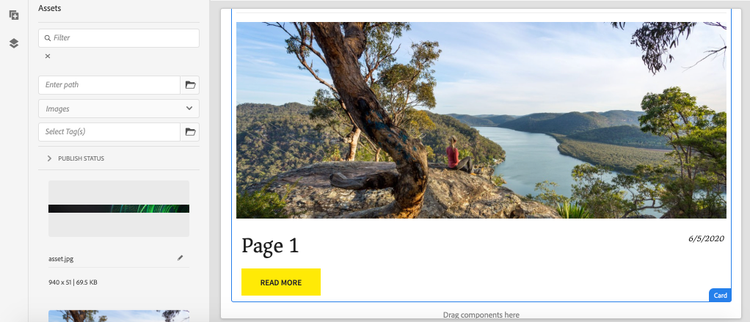
導覽至http://localhost:4502/editor.html/content/wknd-spa-angular/us/en/home.html檢視更新的元件:
-
您應該能夠重新編寫現有內容以建立類似下列的頁面:
恭喜! congratulations
恭喜,您已瞭解如何擴充AEM元件,以及Sling模型和對話方塊如何搭配JSON模型使用。
您隨時可以在 GitHub 上檢視完成的程式碼,或透過切換到分支 Angular/extend-component-solution 在本機查看程式碼。