Aggiungi navigazione e indirizzamento navigation-routing
- Editor universale per la modifica visiva di contenuti headless.
- Editor frammenti di contenuto per la modifica di contenuti headless basata su modulo.
Scopri come sono supportate più visualizzazioni nell’applicazione a pagina singola utilizzando AEM Pages e l’editor per applicazioni a pagina singola SDK. La navigazione dinamica viene implementata utilizzando i percorsi di Angular e aggiunta a un componente Intestazione esistente.
Obiettivo
- Comprendi le opzioni di indirizzamento del modello SPA disponibili quando utilizzi l’Editor SPA.
- Scopri come utilizzare il routing di Angular per spostarti tra le diverse visualizzazioni dell’applicazione a pagina singola.
- Implementa una navigazione dinamica guidata dalla gerarchia delle pagine di AEM.
Cosa verrà creato
Questo capitolo aggiunge un menu di navigazione a un componente Header esistente. Il menu di navigazione è gestito dalla gerarchia di pagine di AEM e utilizza il modello JSON fornito dal componente core Navigazione.

Prerequisiti
Rivedi gli strumenti e le istruzioni necessari per configurare un ambiente di sviluppo locale.
Ottieni il codice
-
Scarica il punto di partenza per questa esercitazione tramite Git:
code language-shell $ git clone git@github.com:adobe/aem-guides-wknd-spa.git $ cd aem-guides-wknd-spa $ git checkout Angular/navigation-routing-start -
Implementa la base di codice in un’istanza AEM locale utilizzando Maven:
code language-shell $ mvn clean install -PautoInstallSinglePackageSe utilizzi AEM 6.x, aggiungi il profilo
classic:code language-shell $ mvn clean install -PautoInstallSinglePackage -Pclassic -
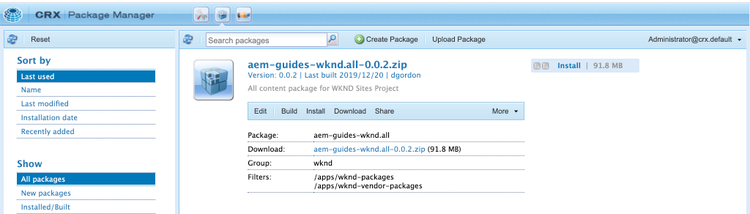
Installa il pacchetto finito per il sito di riferimento WKND tradizionale. Le immagini fornite dal sito di riferimento WKND sono riutilizzate nell’applicazione a pagina singola WKND. È possibile installare il pacchetto utilizzando Gestione pacchetti di AEM.
Puoi sempre visualizzare il codice finito su GitHub o estrarre il codice localmente passando al ramo Angular/navigation-routing-solution.
Controlla aggiornamenti HeaderComponent inspect-header
Nei capitoli precedenti, il componente HeaderComponent è stato aggiunto come componente Angular puro incluso tramite app.component.html. In questo capitolo, il componente HeaderComponent viene rimosso dall’app e aggiunto tramite Editor modelli. Questo consente agli utenti di configurare il menu di navigazione di HeaderComponent da AEM.
-
Nell’IDE che preferisci aprire il progetto iniziale dell’applicazione a pagina singola per questo capitolo.
-
Sotto il modulo
ui.frontendcontrollare il fileheader.component.tsin:ui.frontend/src/app/components/header/header.component.ts.Sono stati apportati diversi aggiornamenti, tra cui l’aggiunta di un
HeaderEditConfige unMapToper consentire il mapping del componente a un componente AEMwknd-spa-angular/components/header.code language-js /* header.component.ts */ ... const HeaderEditConfig = { ... }; @Component({ selector: 'app-header', templateUrl: './header.component.html', styleUrls: ['./header.component.scss'] }) export class HeaderComponent implements OnInit { @Input() items: object[]; ... } ... MapTo('wknd-spa-angular/components/header')(withRouter(Header), HeaderEditConfig);Annotare l’annotazione
@Input()peritems.itemsconterrà un array di oggetti di navigazione passati da AEM. -
Nel modulo
ui.appsverificare la definizione del componente AEMHeader:ui.apps/src/main/content/jcr_root/apps/wknd-spa-angular/components/header/.content.xml:code language-xml <?xml version="1.0" encoding="UTF-8"?> <jcr:root xmlns:sling="http://sling.apache.org/jcr/sling/1.0" xmlns:cq="http://www.day.com/jcr/cq/1.0" xmlns:jcr="http://www.jcp.org/jcr/1.0" jcr:primaryType="cq:Component" jcr:title="Header" sling:resourceSuperType="wknd-spa-angular/components/navigation" componentGroup="WKND SPA Angular - Structure"/>Il componente AEM
Headererediterà tutte le funzionalità del componente core Navigazione tramite la proprietàsling:resourceSuperType.
Aggiungere il componente HeaderComponent al modello di applicazione a pagina singola add-header-template
-
Apri un browser e accedi ad AEM, http://localhost:4502/. La base di codice iniziale deve essere già distribuita.
-
Passare al Modello pagina SPA: http://localhost:4502/editor.html/conf/wknd-spa-angular/settings/wcm/templates/spa-page-template/structure.html.
-
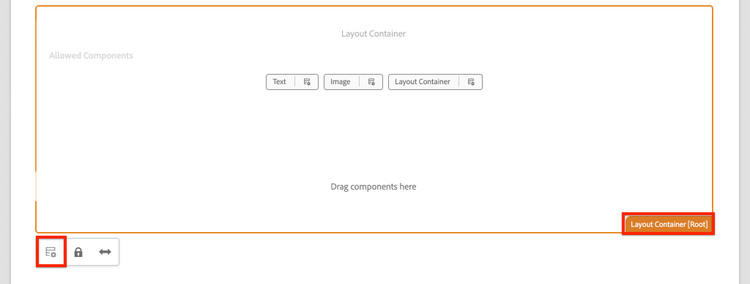
Seleziona il contenitore di layout principale più esterno e fai clic sulla relativa icona Criteri. Fai attenzione a not per selezionare il Contenitore di layout non bloccato per l’authoring.
-
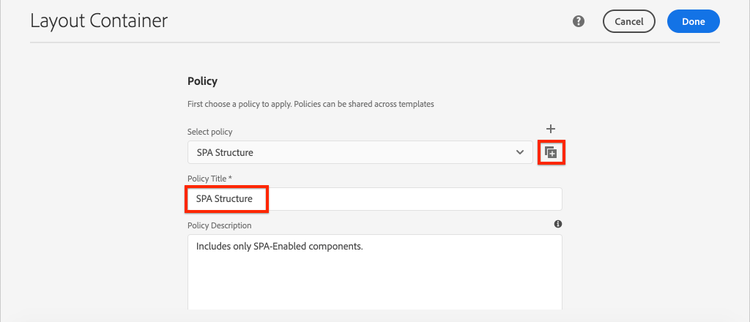
Copia il criterio corrente e crea un nuovo criterio denominato Struttura SPA:
In Componenti consentiti > Generale > seleziona il componente Contenitore di layout.
In Componenti consentiti > ANGULAR SPA WKND - STRUTTURA > seleziona il componente Intestazione:
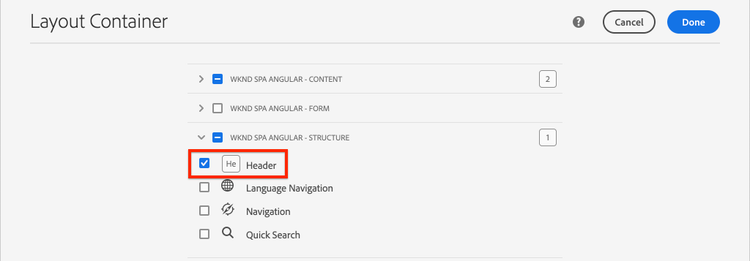
In Componenti consentiti > ANGULAR SPA WKND - Contenuto > seleziona i componenti Immagine e Testo. Dovresti aver selezionato 4 componenti totali.
Per salvare le modifiche, fai clic su Completati.
-
Aggiorna la pagina. Aggiungi il componente Intestazione sopra il Contenitore di layout non bloccato:
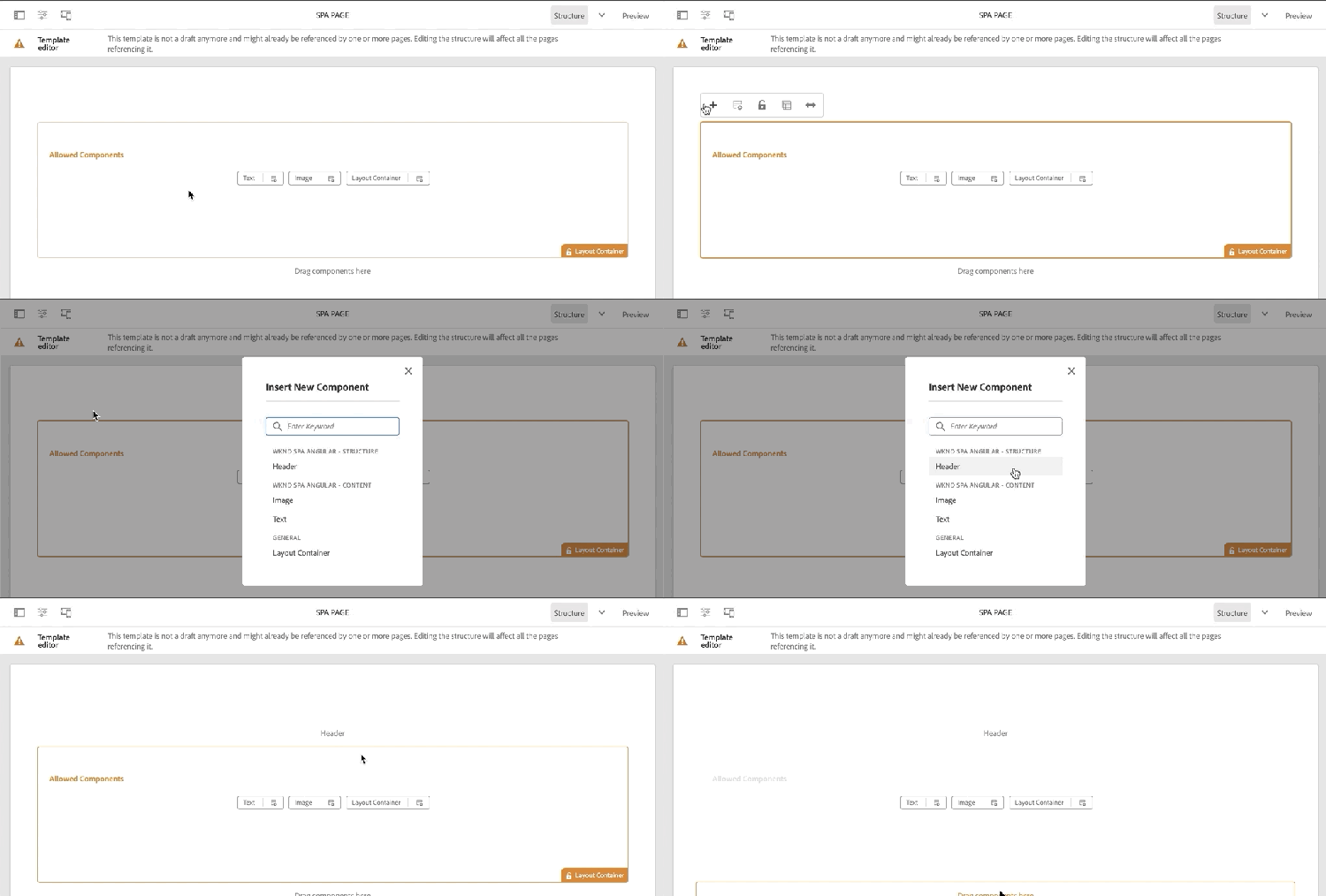
-
Selezionare il componente Header e fare clic sulla relativa icona Policy per modificare il criterio.

-
Creare un nuovo criterio con un Titolo criterio di “Intestazione SPA WKND”.
In Proprietà:
- Impostare Directory principale di navigazione su
/content/wknd-spa-angular/us/en. - Imposta Escludi livelli principali su 1.
- Deseleziona Raccogli tutte le pagine figlie.
- Imposta la profondità della struttura di navigazione su 3.
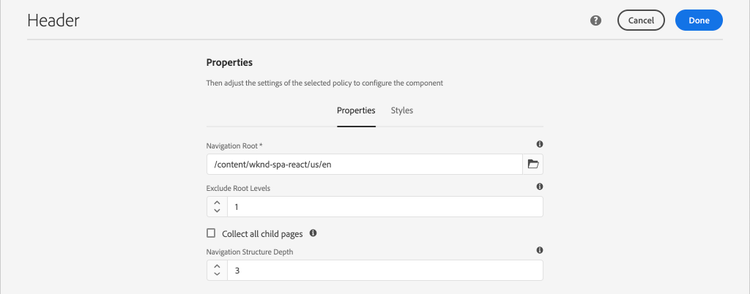
In questo modo verranno raccolti i 2 livelli di navigazione inferiori a
/content/wknd-spa-angular/us/en. - Impostare Directory principale di navigazione su
-
Dopo aver salvato le modifiche, dovresti visualizzare
Headerpopolato come parte del modello: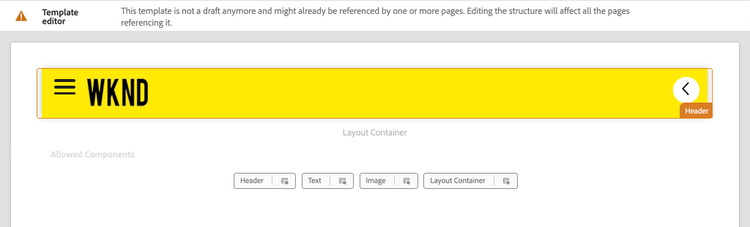
Creare pagine figlie
Quindi, crea ulteriori pagine in AEM che fungeranno da diverse visualizzazioni nell’applicazione a pagina singola. Esamineremo inoltre la struttura gerarchica del modello JSON fornito da AEM.
-
Passare alla console Sites: http://localhost:4502/sites.html/content/wknd-spa-angular/us/en/home. Seleziona la home page di Angular per applicazioni a pagina singola WKND e fai clic su Crea > Pagina:
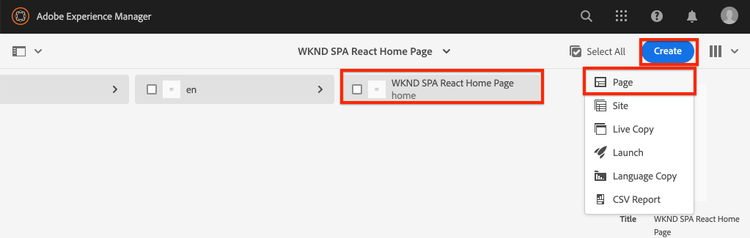
-
In Modello selezionare Pagina SPA. In Proprietà immettere “Pagina 1” per il Titolo e “pagina-1” come nome.
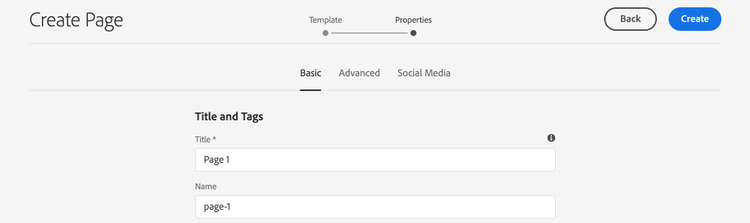
Fai clic su Crea e nella finestra a comparsa fai clic su Apri per aprire la pagina nell’editor SPA di AEM.
-
Aggiungi un nuovo componente Testo al Contenitore di layout principale. Modificare il componente e immettere il testo: “Pagina 1” utilizzando l’editor Rich Text e l’elemento H1 (sarà necessario attivare la modalità a schermo intero per modificare gli elementi del paragrafo)
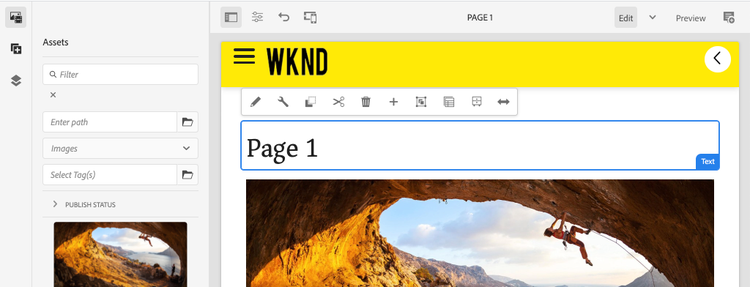
Puoi aggiungere altri contenuti, come un’immagine.
-
Torna alla console AEM Sites e ripeti i passaggi precedenti, creando una seconda pagina denominata “Pagina 2” come pari livello di Pagina 1. Aggiungere contenuto a Pagina 2 per identificarlo facilmente.
-
Infine, crea una terza pagina, “Pagina 3” ma come elemento secondario di Pagina 2. Una volta completato, la gerarchia del sito avrà l’aspetto seguente:
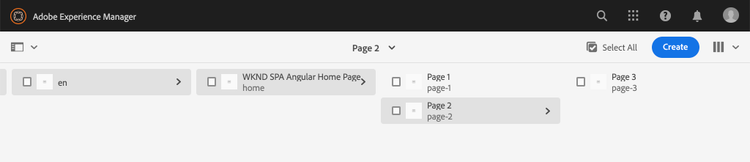
-
In una nuova scheda, apri l’API del modello JSON fornita da AEM: http://localhost:4502/content/wknd-spa-angular/us/en.model.json. Questo contenuto JSON viene richiesto al primo caricamento dell’applicazione a pagina singola. La struttura esterna si presenta come segue:
code language-json { "language": "en", "title": "en", "templateName": "spa-app-template", "designPath": "/libs/settings/wcm/designs/default", "cssClassNames": "spa page basicpage", ":type": "wknd-spa-angular/components/spa", ":items": {}, ":itemsOrder": [], ":hierarchyType": "page", ":path": "/content/wknd-spa-angular/us/en", ":children": { "/content/wknd-spa-angular/us/en/home": {}, "/content/wknd-spa-angular/us/en/home/page-1": {}, "/content/wknd-spa-angular/us/en/home/page-2": {}, "/content/wknd-spa-angular/us/en/home/page-2/page-3": {} } }In
:childrendovresti visualizzare una voce per ciascuna delle pagine create. Il contenuto di tutte le pagine si trova in questa richiesta JSON iniziale. Una volta implementato il routing di navigazione, le visualizzazioni successive dell’applicazione a pagina singola vengono caricate rapidamente, in quanto il contenuto è già disponibile lato client.Non è consigliabile caricare ALL del contenuto di un’applicazione a pagina singola nella richiesta JSON iniziale, in quanto ciò rallenterebbe il caricamento della pagina iniziale. Quindi, vediamo come viene raccolta la profondità gerarchica delle pagine.
-
Passa al modello Radice applicazione a pagina singola in: http://localhost:4502/editor.html/conf/wknd-spa-angular/settings/wcm/templates/spa-app-template/structure.html.
Fai clic sul menu Proprietà pagina > Criterio pagina:
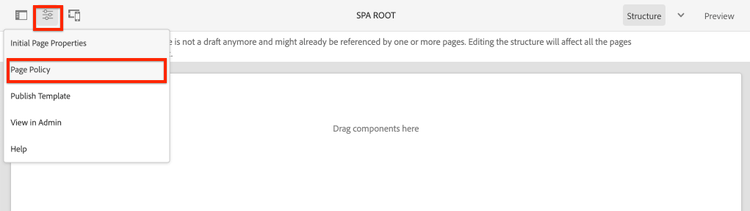
-
Il modello Radice applicazione a pagina singola include una scheda Struttura gerarchica aggiuntiva per controllare il contenuto JSON raccolto. L’Annidamento struttura determina la profondità nella gerarchia del sito per raccogliere le pagine figlie sotto la radice. È inoltre possibile utilizzare il campo Modelli struttura per filtrare ulteriori pagine in base a un’espressione regolare.
Aggiorna Annidamento struttura in “2”:
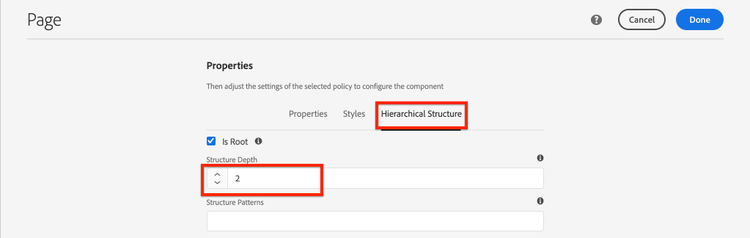
Fai clic su Fine per salvare le modifiche al criterio.
-
Riapri il modello JSON http://localhost:4502/content/wknd-spa-angular/us/en.model.json.
code language-json { "language": "en", "title": "en", "templateName": "spa-app-template", "designPath": "/libs/settings/wcm/designs/default", "cssClassNames": "spa page basicpage", ":type": "wknd-spa-angular/components/spa", ":items": {}, ":itemsOrder": [], ":hierarchyType": "page", ":path": "/content/wknd-spa-angular/us/en", ":children": { "/content/wknd-spa-angular/us/en/home": {}, "/content/wknd-spa-angular/us/en/home/page-1": {}, "/content/wknd-spa-angular/us/en/home/page-2": {} } }Il percorso Pagina 3 è stato rimosso:
/content/wknd-spa-angular/us/en/home/page-2/page-3dal modello JSON iniziale.Successivamente, osserveremo come AEM SPA Editor SDK può caricare dinamicamente contenuti aggiuntivi.
Implementare la navigazione
Successivamente, implementare il menu di navigazione con un nuovo NavigationComponent. È possibile aggiungere il codice direttamente in header.component.html, ma è consigliabile evitare di utilizzare componenti di grandi dimensioni. Implementare invece un NavigationComponent che potrebbe essere riutilizzato in un secondo momento.
-
Rivedi il JSON esposto dal componente AEM
Headerin http://localhost:4502/content/wknd-spa-angular/us/en.model.json:code language-json ... "header": { "items": [ { "level": 0, "active": true, "path": "/content/wknd-spa-angular/us/en/home", "description": null, "url": "/content/wknd-spa-angular/us/en/home.html", "lastModified": 1589062597083, "title": "WKND SPA Angular Home Page", "children": [ { "children": [], "level": 1, "active": false, "path": "/content/wknd-spa-angular/us/en/home/page-1", "description": null, "url": "/content/wknd-spa-angular/us/en/home/page-1.html", "lastModified": 1589429385100, "title": "Page 1" }, { "level": 1, "active": true, "path": "/content/wknd-spa-angular/us/en/home/page-2", "description": null, "url": "/content/wknd-spa-angular/us/en/home/page-2.html", "lastModified": 1589429603507, "title": "Page 2", "children": [ { "children": [], "level": 2, "active": false, "path": "/content/wknd-spa-angular/us/en/home/page-2/page-3", "description": null, "url": "/content/wknd-spa-angular/us/en/home/page-2/page-3.html", "lastModified": 1589430413831, "title": "Page 3" } ], } ] } ], ":type": "wknd-spa-angular/components/header"La natura gerarchica delle pagine AEM è modellata nel JSON e può essere utilizzata per popolare un menu di navigazione. Ricorda che il componente
Headereredita tutte le funzionalità del componente core Navigazione e che il contenuto esposto tramite JSON viene mappato automaticamente all’annotazione Angular@Input. -
Aprire una nuova finestra del terminale e passare alla cartella
ui.frontenddel progetto SPA. Creare un nuovoNavigationComponentutilizzando lo strumento CLI di Angular:code language-shell $ cd ui.frontend $ ng generate component components/navigation CREATE src/app/components/navigation/navigation.component.scss (0 bytes) CREATE src/app/components/navigation/navigation.component.html (25 bytes) CREATE src/app/components/navigation/navigation.component.spec.ts (656 bytes) CREATE src/app/components/navigation/navigation.component.ts (286 bytes) UPDATE src/app/app.module.ts (2032 bytes) -
Creare quindi una classe denominata
NavigationLinkutilizzando Angular CLI nella directorycomponents/navigationappena creata:code language-shell $ cd src/app/components/navigation/ $ ng generate class NavigationLink CREATE src/app/components/navigation/navigation-link.spec.ts (187 bytes) CREATE src/app/components/navigation/navigation-link.ts (32 bytes) -
Torna all’IDE desiderato e apri il file in
navigation-link.tsalle/src/app/components/navigation/navigation-link.ts.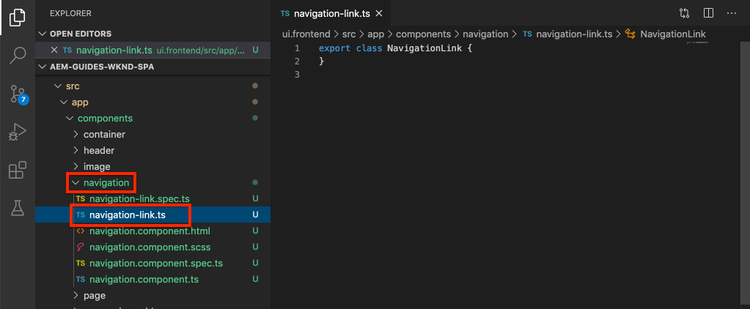
-
Popolare
navigation-link.tscon quanto segue:code language-js export class NavigationLink { title: string; path: string; url: string; level: number; children: NavigationLink[]; active: boolean; constructor(data) { this.path = data.path; this.title = data.title; this.url = data.url; this.level = data.level; this.active = data.active; this.children = data.children.map( item => { return new NavigationLink(item); }); } }Si tratta di una classe semplice che rappresenta un singolo collegamento di navigazione. Nel costruttore di classe è previsto che
datasia l’oggetto JSON trasmesso da AEM. Questa classe viene utilizzata sia inNavigationComponentche inHeaderComponentper popolare facilmente la struttura di navigazione.Non viene eseguita alcuna trasformazione dei dati, questa classe viene creata principalmente per digitare fortemente il modello JSON. Si noti che
this.childrenè digitato comeNavigationLink[]e che il costruttore crea in modo ricorsivo nuovi oggettiNavigationLinkper ciascuno degli elementi nell’arraychildren. Ricorda che il modello JSON perHeaderè gerarchico. -
Apri il file in
navigation-link.spec.ts. File di test per la classeNavigationLink. Aggiornalo con quanto segue:code language-js import { NavigationLink } from './navigation-link'; describe('NavigationLink', () => { it('should create an instance', () => { const data = { children: [], level: 1, active: false, path: '/content/wknd-spa-angular/us/en/home/page-1', description: null, url: '/content/wknd-spa-angular/us/en/home/page-1.html', lastModified: 1589429385100, title: 'Page 1' }; expect(new NavigationLink(data)).toBeTruthy(); }); });Tieni presente che
const datasegue lo stesso modello JSON ispezionato in precedenza per un singolo collegamento. Si tratta di un test di unità non valido, tuttavia dovrebbe essere sufficiente per testare il costruttore diNavigationLink. -
Apri il file in
navigation.component.ts. Aggiornalo con quanto segue:code language-js import { Component, OnInit, Input } from '@angular/core'; import { NavigationLink } from './navigation-link'; @Component({ selector: 'app-navigation', templateUrl: './navigation.component.html', styleUrls: ['./navigation.component.scss'] }) export class NavigationComponent implements OnInit { @Input() items: object[]; constructor() { } get navigationLinks(): NavigationLink[] { if (this.items && this.items.length > 0) { return this.items.map(item => { return new NavigationLink(item); }); } return null; } ngOnInit() {} }NavigationComponentprevede unobject[]denominatoitemsche è il modello JSON di AEM. Questa classe espone un singolo metodoget navigationLinks()che restituisce un array diNavigationLinkoggetti. -
Aprire il file
navigation.component.htmle aggiornarlo con quanto segue:code language-html <ul *ngIf="navigationLinks && navigationLinks.length > 0" class="navigation__group"> <ng-container *ngTemplateOutlet="recursiveListTmpl; context:{ links: navigationLinks }"></ng-container> </ul>Viene generato un
<ul>iniziale e viene chiamato il metodoget navigationLinks()danavigation.component.ts.<ng-container>viene utilizzato per effettuare una chiamata a un modello denominatorecursiveListTmple lo trasmette anavigationLinkscome variabile denominatalinks.Aggiungi
recursiveListTmpldopo:code language-html <ng-template #recursiveListTmpl let-links="links"> <li *ngFor="let link of links" class="{{'navigation__item navigation__item--' + link.level}}"> <a [routerLink]="link.url" class="navigation__item-link" [title]="link.title" [attr.aria-current]="link.active"> {{link.title}} </a> <ul *ngIf="link.children && link.children.length > 0"> <ng-container *ngTemplateOutlet="recursiveListTmpl; context:{ links: link.children }"></ng-container> </ul> </li> </ng-template>Qui viene implementato il resto del rendering per il collegamento di navigazione. Si noti che la variabile
linkè di tipoNavigationLinke che tutti i metodi/proprietà creati da tale classe sono disponibili.[routerLink]viene utilizzato al posto del normale attributohref. Questo ci permette di collegarci a specifici percorsi nell’app, senza un aggiornamento a pagina intera.La parte ricorsiva della navigazione viene implementata anche creando un altro
<ul>se l’attualelinkha un arraychildrennon vuoto. -
Aggiorna
navigation.component.spec.tsper aggiungere il supporto perRouterTestingModule:code language-diff ... + import { RouterTestingModule } from '@angular/router/testing'; ... beforeEach(async(() => { TestBed.configureTestingModule({ + imports: [ RouterTestingModule ], declarations: [ NavigationComponent ] }) .compileComponents(); })); ...È necessario aggiungere
RouterTestingModuleperché il componente utilizza[routerLink]. -
Aggiorna
navigation.component.scssper aggiungere alcuni stili di base aNavigationComponent:code language-scss @import "~src/styles/variables"; $link-color: $black; $link-hover-color: $white; $link-background: $black; :host-context { display: block; width: 100%; } .navigation__item { list-style: none; } .navigation__item-link { color: $link-color; font-size: $font-size-large; text-transform: uppercase; padding: $gutter-padding; display: flex; border-bottom: 1px solid $gray; &:hover { background: $link-background; color: $link-hover-color; } }
Aggiornare il componente intestazione
Ora che NavigationComponent è stato implementato, HeaderComponent deve essere aggiornato per farvi riferimento.
-
Aprire un terminale e passare alla cartella
ui.frontendall’interno del progetto SPA. Avvia il server di sviluppo webpack:code language-shell $ npm start -
Apri una scheda del browser e passa a http://localhost:4200/.
Il server di sviluppo webpack deve essere configurato per fungere da proxy del modello JSON da un’istanza locale di AEM (
ui.frontend/proxy.conf.json). Questo ci consentirà di eseguire il codice direttamente in base al contenuto creato in AEM dall’inizio dell’esercitazione.
La funzionalità di attivazione/disattivazione menu di
HeaderComponentè già stata implementata. Quindi, aggiungi il componente Navigazione. -
Tornare all’IDE desiderato e aprire il file
header.component.tsinui.frontend/src/app/components/header/header.component.ts. -
Aggiorna il metodo
setHomePage()per rimuovere la stringa hardcoded e utilizzare le proprietà dinamiche passate dal componente AEM:code language-js /* header.component.ts */ import { NavigationLink } from '../navigation/navigation-link'; ... setHomePage() { if (this.hasNavigation) { const rootNavigationLink: NavigationLink = new NavigationLink(this.items[0]); this.isHome = rootNavigationLink.path === this.route.snapshot.data.path; this.homePageUrl = rootNavigationLink.url; } } ...Viene creata una nuova istanza di
NavigationLinkbasata suitems[0], la radice del modello JSON di navigazione trasmesso da AEM.this.route.snapshot.data.pathrestituisce il percorso della route Angular corrente. Questo valore viene utilizzato per determinare se la route corrente è la home page.this.homePageUrlviene utilizzato per popolare il collegamento di ancoraggio nel logo. -
Apri
header.component.htmle sostituisci il segnaposto statico per la navigazione con un riferimento alNavigationComponentappena creato:code language-diff <div class="header-navigation"> <div class="navigation"> - Navigation Placeholder + <app-navigation [items]="items"></app-navigation> </div> </div>L’attributo
[items]=itemspassa@Input() itemsdaHeaderComponentaNavigationComponentdove verrà compilata la navigazione. -
Apri
header.component.spec.tse aggiungi una dichiarazione perNavigationComponent:code language-diff /* header.component.spect.ts */ + import { NavigationComponent } from '../navigation/navigation.component'; describe('HeaderComponent', () => { let component: HeaderComponent; let fixture: ComponentFixture<HeaderComponent>; beforeEach(async(() => { TestBed.configureTestingModule({ imports: [ RouterTestingModule ], + declarations: [ HeaderComponent, NavigationComponent ] }) .compileComponents(); }));Poiché
NavigationComponentè ora utilizzato come parte diHeaderComponent, deve essere dichiarato come parte del banco di prova. -
Salva le modifiche apportate ai file aperti e torna al server di sviluppo webpack: http://localhost:4200/
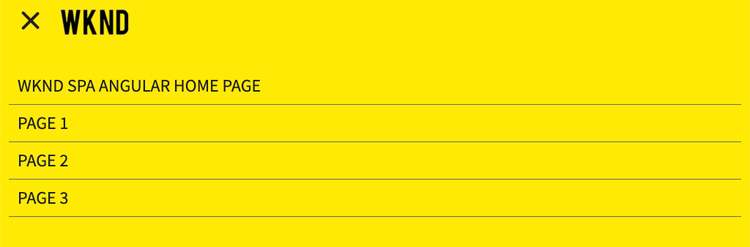
Apri la navigazione facendo clic sull’interruttore del menu; dovresti visualizzare i collegamenti di navigazione compilati. Dovresti essere in grado di passare a diverse visualizzazioni dell’applicazione a pagina singola.
Informazioni sul routing SPA
Ora che la navigazione è stata implementata, controlla il routing in AEM.
-
Nell’IDE aprire il file
app-routing.module.tsinui.frontend/src/app.code language-js /* app-routing.module.ts */ import { AemPageDataResolver, AemPageRouteReuseStrategy } from '@adobe/cq-angular-editable-components'; import { NgModule } from '@angular/core'; import { RouteReuseStrategy, RouterModule, Routes, UrlMatchResult, UrlSegment } from '@angular/router'; import { PageComponent } from './components/page/page.component'; export function AemPageMatcher(url: UrlSegment[]): UrlMatchResult { if (url.length) { return { consumed: url, posParams: { path: url[url.length - 1] } }; } } const routes: Routes = [ { matcher: AemPageMatcher, component: PageComponent, resolve: { path: AemPageDataResolver } } ]; @NgModule({ imports: [RouterModule.forRoot(routes)], exports: [RouterModule], providers: [ AemPageDataResolver, { provide: RouteReuseStrategy, useClass: AemPageRouteReuseStrategy } ] }) export class AppRoutingModule {}L’array
routes: Routes = [];definisce le route o i percorsi di navigazione per i mapping dei componenti Angular.AemPageMatcherè un router Angular personalizzato UrlMatcher, che corrisponde a qualsiasi elemento che “assomiglia” a una pagina in AEM che fa parte di questa applicazione Angular.PageComponentè il componente Angular che rappresenta una pagina in AEM ed è utilizzato per eseguire il rendering delle route corrispondenti.PageComponentviene rivisto più avanti nell’esercitazione.AemPageDataResolver, fornito da AEM SPA Editor JS SDK, è un Angular Router Resolver personalizzato utilizzato per trasformare l’URL del percorso, che è il percorso in AEM con estensione .html, nel percorso della risorsa in AEM, ovvero il percorso della pagina meno l’estensione.Ad esempio,
AemPageDataResolvertrasforma l’URL di una route dicontent/wknd-spa-angular/us/en/home.htmlin un percorso di/content/wknd-spa-angular/us/en/home. Viene utilizzato per risolvere il contenuto della pagina in base al percorso nell’API del modello JSON.AemPageRouteReuseStrategy, fornito da AEM SPA Editor JS SDK, è una RouteReuseStrategy personalizzata che impedisce il riutilizzo diPageComponenttra le route. In caso contrario, il contenuto della pagina “A” potrebbe apparire quando si passa alla pagina “B”. -
Aprire il file
page.component.tsinui.frontend/src/app/components/page/.code language-js ... export class PageComponent { items; itemsOrder; path; constructor( private route: ActivatedRoute, private modelManagerService: ModelManagerService ) { this.modelManagerService .getData({ path: this.route.snapshot.data.path }) .then(data => { this.path = data[Constants.PATH_PROP]; this.items = data[Constants.ITEMS_PROP]; this.itemsOrder = data[Constants.ITEMS_ORDER_PROP]; }); } }PageComponentè necessario per elaborare il JSON recuperato da AEM e viene utilizzato come componente Angular per eseguire il rendering delle route.ActivatedRoute, fornito dal modulo Router Angular, contiene lo stato che indica quale contenuto JSON della pagina AEM deve essere caricato in questa istanza del componente Angular Page.ModelManagerService, ottiene i dati JSON in base alla route e mappa i dati alle variabili di classepath,items,itemsOrder. Questi verranno quindi passati a AEMPageComponent -
Apri il file
page.component.htmlinui.frontend/src/app/components/page/code language-html <aem-page class="structure-page" [attr.data-cq-page-path]="path" [cqPath]="path" [cqItems]="items" [cqItemsOrder]="itemsOrder"> </aem-page>aem-pageinclude AEMPageComponent. Le variabilipath,itemseitemsOrdersono passate aAEMPageComponent.AemPageComponent, fornito tramite l’editor SPA JavaScript SDK, eseguirà quindi l’iterazione di questi dati e creerà un’istanza dinamica dei componenti Angular in base ai dati JSON, come mostrato nell’esercitazione Componenti mappa.PageComponentè in realtà solo un proxy perAEMPageComponented èAEMPageComponentche esegue la maggior parte del lavoro pesante per mappare correttamente il modello JSON ai componenti di Angular.
Ispezionare il routing SPA in AEM
-
Aprire un terminale e arrestare il server di sviluppo webpack, se avviato. Passa alla directory principale del progetto e implementa il progetto in AEM utilizzando le abilità Maven:
code language-shell $ cd aem-guides-wknd-spa $ mvn clean install -PautoInstallSinglePackagenote caution CAUTION Nel progetto Angular sono abilitate alcune regole di evidenziazione molto rigide. Se la compilazione Maven non riesce, controllare l'errore e cercare errori Lint trovati nei file elencati.. Correggi eventuali problemi rilevati dal puntatore ed esegui nuovamente il comando Maven. -
Passa alla home page dell’applicazione a pagina singola in AEM: http://localhost:4502/content/wknd-spa-angular/us/en/home.html e apri gli strumenti per sviluppatori del browser. Le schermate seguenti vengono acquisite dal browser Google Chrome.
Aggiorna la pagina per visualizzare una richiesta XHR a
/content/wknd-spa-angular/us/en.model.json, che è la radice SPA. In base alla configurazione della profondità della gerarchia rispetto al modello radice dell’applicazione a pagina singola creato in precedenza nell’esercitazione, vengono incluse solo tre pagine figlie. Non include Pagina 3.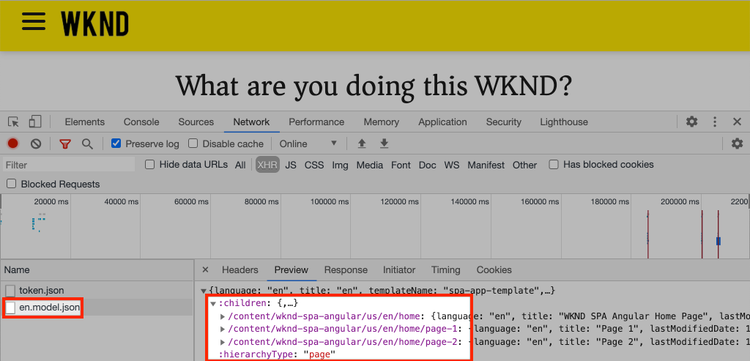
-
Con gli strumenti per sviluppatori aperti, passa a Pagina 3:
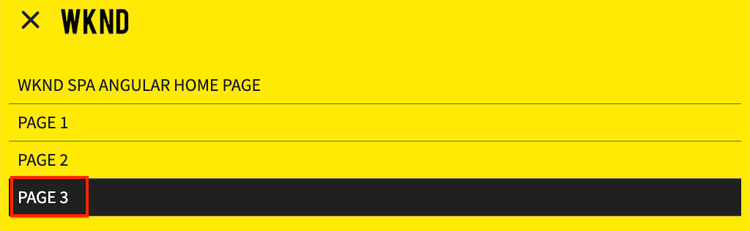
Si noti che è stata effettuata una nuova richiesta XHR a:
/content/wknd-spa-angular/us/en/home/page-2/page-3.model.json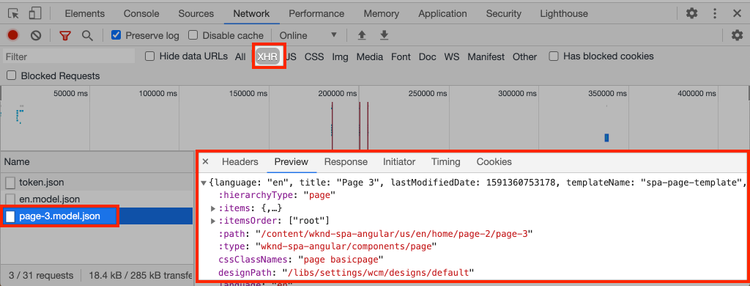
AEM Model Manager riconosce che il contenuto JSON Pagina 3 non è disponibile e attiva automaticamente la richiesta XHR aggiuntiva.
-
Continua a navigare nell’applicazione a pagina singola utilizzando i vari collegamenti di navigazione. Tieni presente che non vengono effettuate richieste XHR aggiuntive e che non si verifica alcun aggiornamento dell’intera pagina. In questo modo l’applicazione a pagina singola è veloce per l’utente finale e riduce le richieste non necessarie ad AEM.
-
Prova i collegamenti profondi navigando direttamente in: http://localhost:4502/content/wknd-spa-angular/us/en/home/page-2.html. Il pulsante Indietro del browser continua a funzionare.
Congratulazioni. congratulations
Congratulazioni, hai imparato come supportare più visualizzazioni nell’applicazione a pagina singola effettuando la mappatura sulle pagine AEM con l’editor per applicazioni a pagina singola SDK. La navigazione dinamica è stata implementata tramite il routing di Angular e aggiunta al componente Header.
Puoi sempre visualizzare il codice finito su GitHub o estrarre il codice localmente passando al ramo Angular/navigation-routing-solution.
Passaggi successivi next-steps
Crea un componente personalizzato - Scopri come creare un componente personalizzato da utilizzare con l’editor SPA di AEM. Scopri come sviluppare finestre di dialogo di authoring e modelli Sling per estendere il modello JSON e popolare un componente personalizzato.