Componentes de contenedor editables
- El Editor universal para editar contenido sin encabezado de forma visual.
- El Editor de fragmentos de contenido para la edición de contenido sin encabezado basada en formularios.
Los componentes fijos proporcionan cierta flexibilidad para la creación de contenido de SPA; sin embargo, este enfoque es rígido y requiere que los desarrolladores definan la composición exacta del contenido editable. Para admitir la creación de experiencias excepcionales por parte de los autores, el Editor de SPA admite el uso de componentes de contenedor en la SPA. Los componentes de contenedor permiten a los autores arrastrar y soltar los componentes permitidos en el contenedor y crearlos, tal como lo pueden hacer en la creación tradicional de AEM Sites.
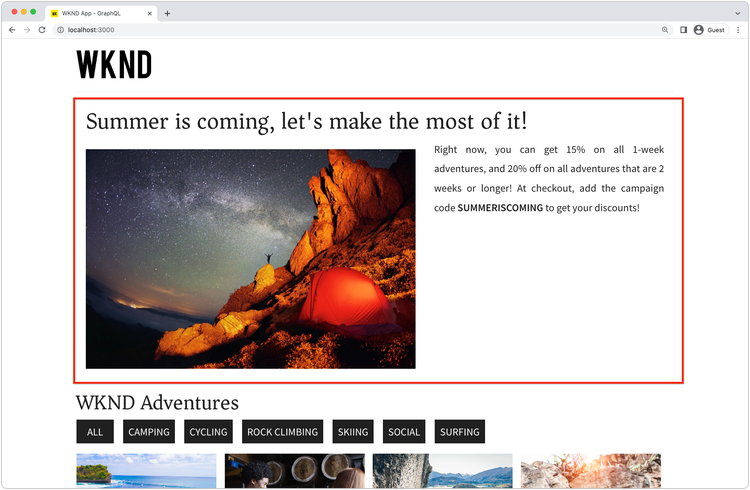
En este capítulo, agregamos un contenedor editable a la vista de inicio que permite a los autores componer y diseñar experiencias de contenido enriquecido mediante componentes de React editables directamente en la SPA.
Actualización de la aplicación WKND
Para agregar un componente de contenedor a la vista Inicio:
- Importar el componente
ResponsiveGriddel componente editable React de AEM - Importar y registrar componentes React editables personalizados (texto e imagen) para utilizarlos en el componente Cuadrícula interactiva
Uso del componente Cuadrícula interactiva
Para agregar un área editable a la vista Inicio:
-
Abrir y editar
react-app/src/components/Home.js -
Importar el componente
ResponsiveGriddesde@adobe/aem-react-editable-componentsy agregarlo al componenteHome. -
Establezca los siguientes atributos en el componente
<ResponsiveGrid...>pagePath = '/content/wknd-app/us/en/home'itemPath = 'root/responsivegrid'
Esto indica al componente
ResponsiveGridque recupere su contenido del recurso de AEM:/content/wknd-app/us/en/home/jcr:content/root/responsivegrid
itemPathse asigna al nodoresponsivegriddefinido en la plantilla de AEMRemote SPA Pagey se crea automáticamente en las nuevas páginas de AEM creadas a partir de la plantilla de AEMRemote SPA Page.Actualice
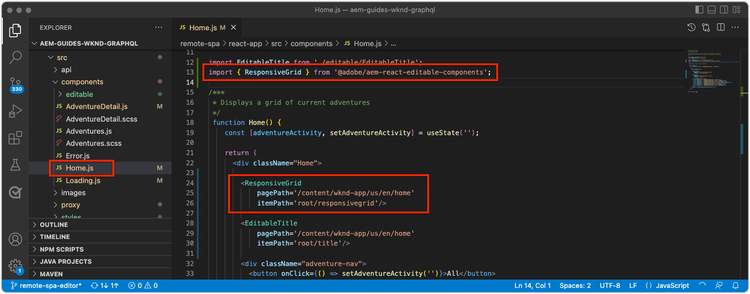
Home.jspara agregar el componente<ResponsiveGrid...>.code language-javascript ... import { ResponsiveGrid } from '@adobe/aem-react-editable-components'; ... function Home() { return ( <div className="Home"> <ResponsiveGrid pagePath='/content/wknd-app/us/en/home' itemPath='root/responsivegrid'/> <EditableTitle pagePath='/content/wknd-app/us/en/home' itemPath='title'/> <Adventures /> </div> ); }
El archivo Home.js debe tener el siguiente aspecto:
Crear componentes editables
Para obtener el efecto completo de la flexibilidad que ofrecen los contenedores de experiencia de creación en el Editor de SPA. Ya hemos creado un componente Título editable, pero vamos a hacer algunos más que permitan a los autores utilizar componentes Texto e Imagen editables en el componente Cuadrícula interactiva recién agregado.
Los nuevos componentes Texto editable y Reacción de imagen se crean utilizando el patrón de definición de componente editable exportado en componentes fijos editables.
Componente de texto editable
-
Abra el proyecto SPA en su IDE
-
Crear un componente de React en
src/components/editable/core/Text.js -
Agregar el siguiente código a
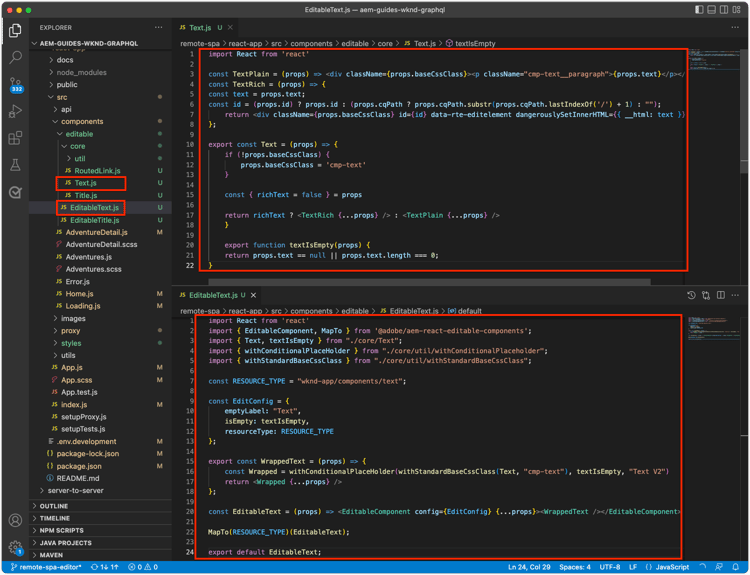
Text.jscode language-javascript import React from 'react' const TextPlain = (props) => <div className={props.baseCssClass}><p className="cmp-text__paragraph">{props.text}</p></div>; const TextRich = (props) => { const text = props.text; const id = (props.id) ? props.id : (props.cqPath ? props.cqPath.substr(props.cqPath.lastIndexOf('/') + 1) : ""); return <div className={props.baseCssClass} id={id} data-rte-editelement dangerouslySetInnerHTML={{ __html: text }} /> }; export const Text = (props) => { if (!props.baseCssClass) { props.baseCssClass = 'cmp-text' } const { richText = false } = props return richText ? <TextRich {...props} /> : <TextPlain {...props} /> } export function textIsEmpty(props) { return props.text == null || props.text.length === 0; } -
Crear un componente React editable en
src/components/editable/EditableText.js -
Agregar el siguiente código a
EditableText.jscode language-javascript import React from 'react' import { EditableComponent, MapTo } from '@adobe/aem-react-editable-components'; import { Text, textIsEmpty } from "./core/Text"; import { withConditionalPlaceHolder } from "./core/util/withConditionalPlaceholder"; import { withStandardBaseCssClass } from "./core/util/withStandardBaseCssClass"; const RESOURCE_TYPE = "wknd-app/components/text"; const EditConfig = { emptyLabel: "Text", isEmpty: textIsEmpty, resourceType: RESOURCE_TYPE }; export const WrappedText = (props) => { const Wrapped = withConditionalPlaceHolder(withStandardBaseCssClass(Text, "cmp-text"), textIsEmpty, "Text V2") return <Wrapped {...props} /> }; const EditableText = (props) => <EditableComponent config={EditConfig} {...props}><WrappedText /></EditableComponent> MapTo(RESOURCE_TYPE)(EditableText); export default EditableText;
La implementación del componente Texto editable debería tener un aspecto similar al siguiente:
Componente de imagen
-
Abra el proyecto SPA en su IDE
-
Crear un componente de React en
src/components/editable/core/Image.js -
Agregar el siguiente código a
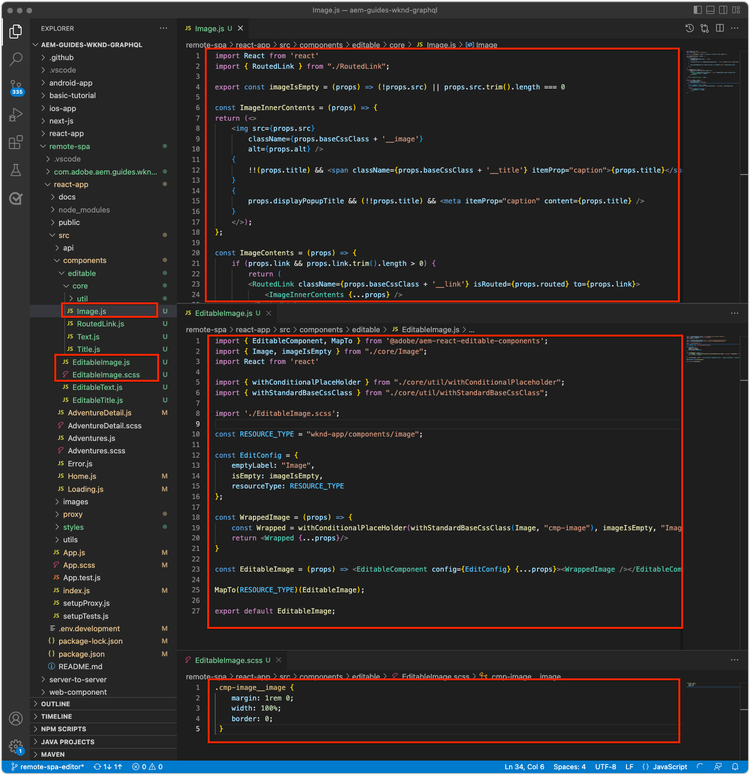
Image.jscode language-javascript import React from 'react' import { RoutedLink } from "./RoutedLink"; export const imageIsEmpty = (props) => (!props.src) || props.src.trim().length === 0 const ImageInnerContents = (props) => { return (<> <img src={props.src} className={props.baseCssClass + '__image'} alt={props.alt} /> { !!(props.title) && <span className={props.baseCssClass + '__title'} itemProp="caption">{props.title}</span> } { props.displayPopupTitle && (!!props.title) && <meta itemProp="caption" content={props.title} /> } </>); }; const ImageContents = (props) => { if (props.link && props.link.trim().length > 0) { return ( <RoutedLink className={props.baseCssClass + '__link'} isRouted={props.routed} to={props.link}> <ImageInnerContents {...props} /> </RoutedLink> ) } return <ImageInnerContents {...props} /> }; export const Image = (props) => { if (!props.baseCssClass) { props.baseCssClass = 'cmp-image' } const { isInEditor = false } = props; const cssClassName = (isInEditor) ? props.baseCssClass + ' cq-dd-image' : props.baseCssClass; return ( <div className={cssClassName}> <ImageContents {...props} /> </div> ) }; -
Crear un componente React editable en
src/components/editable/EditableImage.js -
Agregar el siguiente código a
EditableImage.js
import { EditableComponent, MapTo } from '@adobe/aem-react-editable-components';
import { Image, imageIsEmpty } from "./core/Image";
import React from 'react'

import { withConditionalPlaceHolder } from "./core/util/withConditionalPlaceholder";
import { withStandardBaseCssClass } from "./core/util/withStandardBaseCssClass";

const RESOURCE_TYPE = "wknd-app/components/image";

const EditConfig = {
    emptyLabel: "Image",
    isEmpty: imageIsEmpty,
    resourceType: RESOURCE_TYPE
};

const WrappedImage = (props) => {
    const Wrapped = withConditionalPlaceHolder(withStandardBaseCssClass(Image, "cmp-image"), imageIsEmpty, "Image V2");
    return <Wrapped {...props}/>
}

const EditableImage = (props) => <EditableComponent config={EditConfig} {...props}><WrappedImage /></EditableComponent>

MapTo(RESOURCE_TYPE)(EditableImage);

export default EditableImage;
-
Cree un archivo SCSS
src/components/editable/EditableImage.scssque proporcione estilos personalizados paraEditableImage.scss. Estos estilos se dirigen a las clases CSS del componente React editable. -
Agregar el SCSS siguiente a
EditableImage.scsscode language-css .cmp-image__image { margin: 1rem 0; width: 100%; border: 0; } -
Importar
EditableImage.scssenEditableImage.jscode language-javascript ... import './EditableImage.scss'; ...
La implementación del componente Imagen editable debe tener un aspecto similar al siguiente:
Importar los componentes editables
Se hace referencia en la SPA a los componentes EditableText y EditableImage React recién creados y se crean instancias de forma dinámica en función del JSON devuelto por AEM. Para asegurarse de que estos componentes están disponibles para la SPA, cree instrucciones de importación para ellos en Home.js
-
Abra el proyecto SPA en su IDE
-
Abra el archivo
src/Home.js -
Agregar instrucciones de importación para
AEMTextyAEMImagecode language-javascript ... // The following need to be imported, so that MapTo is run for the components import EditableText from './editable/EditableText'; import EditableImage from './editable/EditableImage'; ...
El resultado debería ser similar al siguiente:
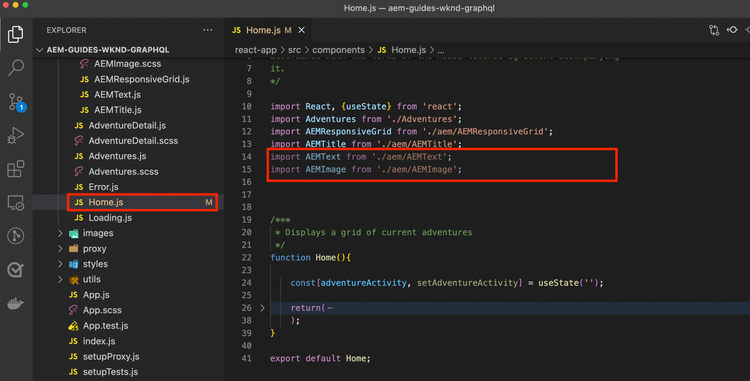
Si se agregan estas importaciones no, la SPA no invocará el código EditableText y EditableImage y, por lo tanto, los componentes no están asignados a los tipos de recursos proporcionados.
Configuración del contenedor en AEM
Los componentes de contenedor de AEM utilizan directivas para dictar los componentes permitidos. Esta configuración es crítica al utilizar el Editor de SPA, ya que solo los componentes de AEM que tienen equivalentes de componentes de SPA asignados se pueden procesar mediante la SPA. Asegúrese de que solo se permiten los componentes para los que hemos proporcionado implementaciones de SPA:
EditableTitlese asignó awknd-app/components/titleEditableTextse asignó awknd-app/components/textEditableImagese asignó awknd-app/components/image
Para configurar el contenedor de cuadrícula adaptable de la plantilla de la SPA remota:
-
Iniciar sesión en AEM Author
-
Vaya a Herramientas > General > Plantillas > Aplicación WKND
-
Editar página de SPA de informe
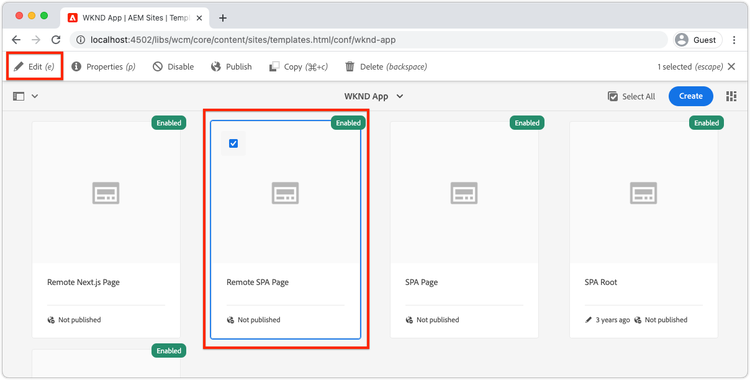
-
Seleccione Estructura en el conmutador de modo en la parte superior derecha
-
Pulse para seleccionar Contenedor de diseño
-
Pulse el icono Directiva en la barra emergente
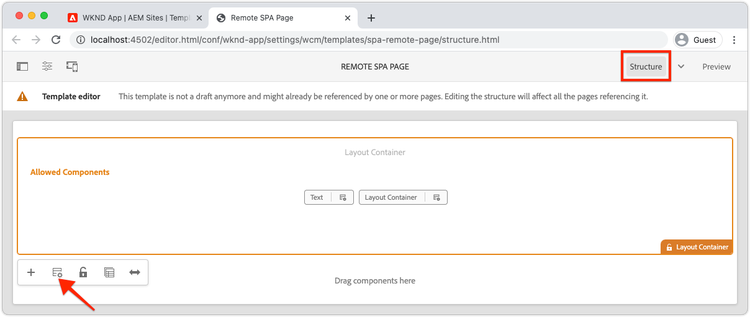
-
A la derecha, en la ficha Componentes permitidos, expanda WKND APP - CONTENT
-
Asegúrese de que solo están seleccionadas las siguientes opciones:
- Imagen
- Texto
- Título
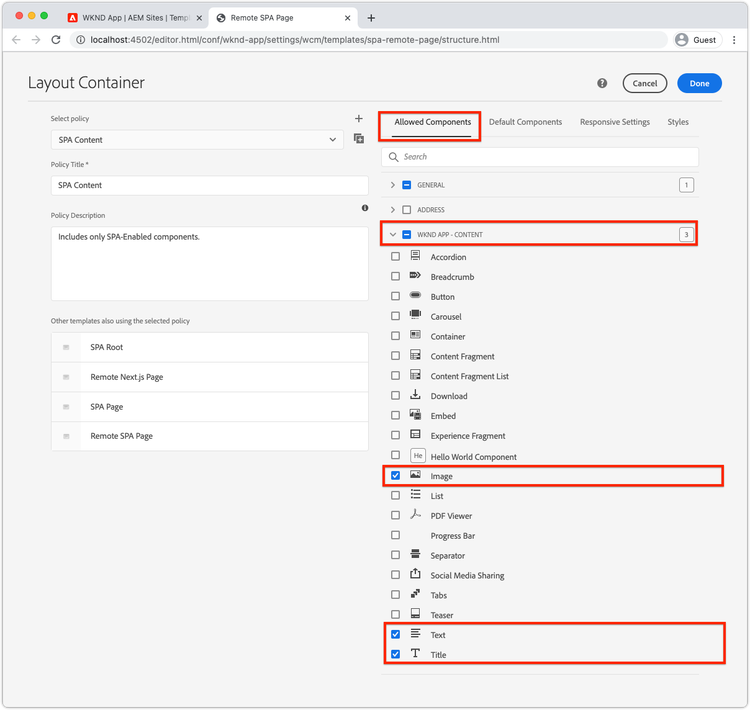
-
Pulse Listo
Creación del contenedor en AEM
Después de actualizar el SPA para incrustar <ResponsiveGrid...>, los contenedores de tres componentes React editables (EditableTitle, EditableText y EditableImage) y de actualizar AEM con una directiva de plantilla coincidente, se puede empezar a crear contenido en el componente contenedor.
-
Iniciar sesión en AEM Author
-
Vaya a Sitios > Aplicación WKND
-
Pulse Inicio y seleccione Editar en la barra de acciones superior
- Se muestra un componente de texto “Hello World”, ya que este se agregó automáticamente al generar el proyecto a partir del arquetipo de proyecto de AEM
-
Seleccione Editar en el selector de modo en la parte superior derecha del Editor de páginas
-
Busque el área editable Contenedor de diseño debajo del título
-
Abra la barra lateral del editor de páginas y seleccione la vista Componentes
-
Arrastre los siguientes componentes al contenedor de diseño
- Imagen
- Título
-
Arrastre los componentes para reordenarlos al siguiente orden:
- Título
- Imagen
- Texto
-
Autor del componente Título
-
Pulse el componente Título y pulse el icono llave inglesa para editar el componente Título
-
Añada el siguiente texto:
- Título: Se acerca el verano, aprovechemos al máximo
- Tipo: H1
-
Pulse Listo
-
-
Autor del componente Imagen
- Arrastre una imagen desde la barra lateral (después de cambiar a la vista de Assets) en el componente Imagen
- Pulse el componente Imagen y pulse el icono llave inglesa para editar
- Marque la casilla La imagen es decorativa
- Pulse Listo
-
Autor del componente Texto
- Edite el componente Texto tocando el componente Texto y pulsando el icono wrench
- Añada el siguiente texto:
- Ahora mismo, puedes obtener un 15% de descuento en todas las aventuras de una semana y un 20% de descuento en todas las aventuras de dos semanas o más. Al finalizar la compra, agrega el código de campaña SUMMERISCOMING para obtener tus descuentos.
- Pulse Listo
-
Los componentes ya se han creado, pero se apilan verticalmente.
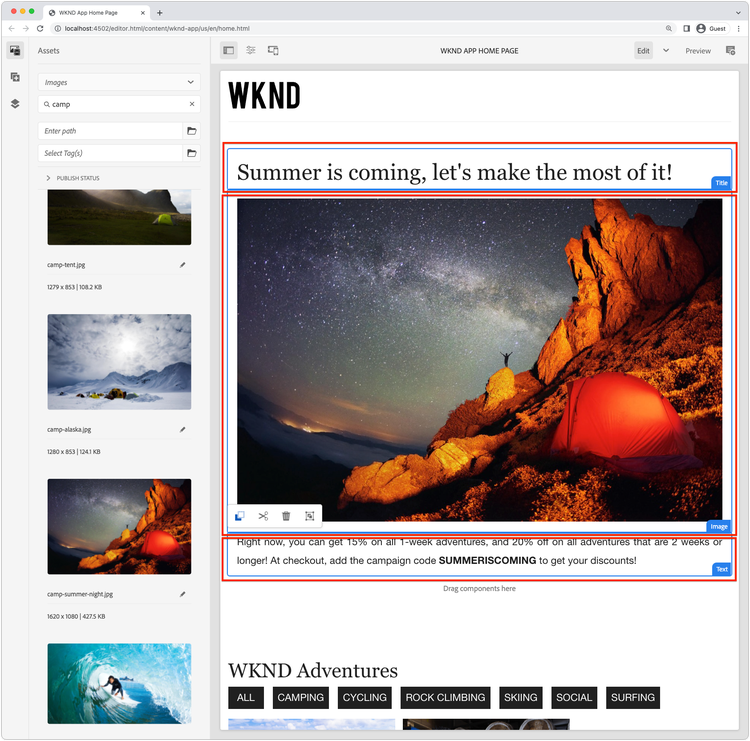
Utilice el modo Diseño de AEM para permitirnos ajustar el tamaño y el diseño de los componentes.
-
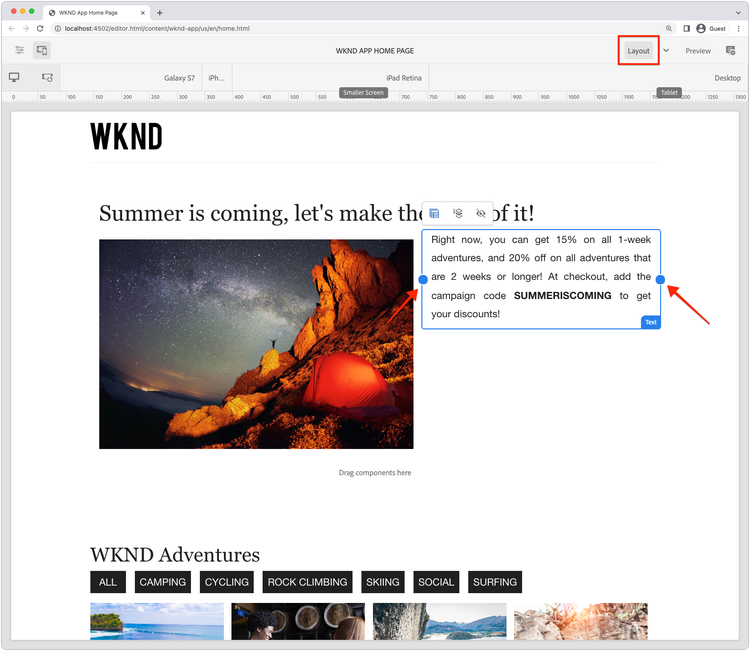
Cambie a Modo de diseño con el selector de modo en la esquina superior derecha
-
Cambiar el tamaño de los componentes Imagen y Texto, de manera que estén uno al lado del otro
- El componente Image debe tener 8 columnas de ancho
- El componente Texto debe tener 3 columnas de ancho
-
Vista previa de sus cambios en el editor de páginas de AEM
-
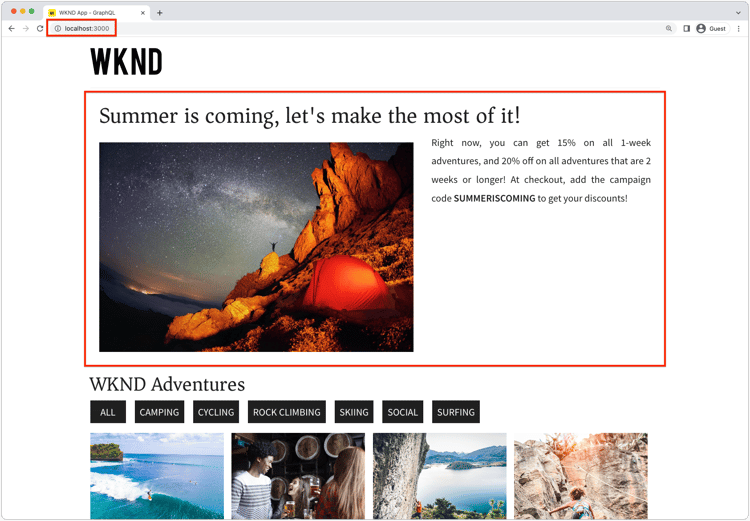
Actualice la aplicación WKND que se ejecuta localmente en http://localhost:3000 para ver los cambios creados.
Enhorabuena.
Ha agregado un componente contenedor que permite a los autores agregar componentes editables a la aplicación WKND. Ahora ya sabe cómo:
- Usar el componente
ResponsiveGriddel componente editable React de AEM en la SPA - Crear y registrar componentes React editables (texto e imagen) para utilizarlos en la SPA a través del componente contenedor
- Configure la plantilla Página de la SPA remota para permitir los componentes con SPA habilitada
- Agregar componentes editables al componente contenedor
- Creación y componentes de diseño en el Editor de SPA
Próximos pasos
El siguiente paso usa esta misma técnica para agregar un componente editable a una ruta de detalles de aventura en la SPA.