Learn how to thoughtfully define Marketing Channels and apply Last‑Touch attribution in Adobe Analytics, aligning marketing intent with measurement through clear channel structures, processing rules, and campaign parameters.
Why marketing channels matter more than most teams realize
Marketing Channels influence nearly every acquisition and conversion report relied upon by marketers, analysts, and executive stakeholders. When channel definitions are unclear or poorly ordered, the impact is immediate: paid campaigns blend into organic traffic, referrals mask campaign performance, and direct traffic expands into an unhelpful catch‑all.
Adobe Analytics mitigates this risk by separating channel structure from channel logic. Channels establish a stable reporting vocabulary, while processing rules control how traffic qualifies. This separation allows marketing strategies to evolve without destabilizing reporting foundations.
Understanding the last touch channel
The Last Touch Channel represents the most recent marketing channel that a visitor qualifies for during their engagement window. Each qualifying visit has the potential to update this value. If no new qualifying channel is encountered, the previous value persists until the engagement period expires.
This behavior ensures last‑touch reporting reflects genuine re‑engagement patterns rather than isolated interactions, highlighting which channels are effective closer to the point of decision.
Why last‑touch attribution remains relevant
Last‑touch attribution assigns credit to the most recent marketing channel a visitor engaged with before converting. While it does not attempt to describe the entire customer journey, it answers a practical and frequently asked question: Which channel most recently influenced the outcome?
In fast‑moving campaign environments, last‑touch attribution provides clarity and interpretability. It helps teams understand which channels are effective at re‑engagement and conversion‑driving moments, making it especially useful for optimization and investment decisions.
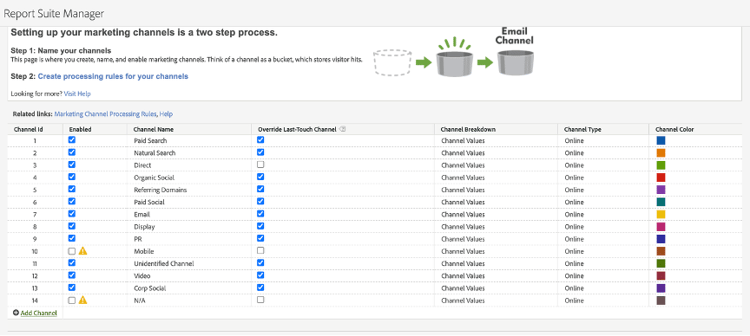
Defining channels in the marketing channel manager
Implementation begins in the Marketing Channel Manager, where channels are defined as broad acquisition categories rather than individual campaigns. This distinction is intentional. It ensures that reporting remains stable even as campaign tactics, naming conventions, and platforms evolve.
A mature channel framework typically spans paid, owned, earned, and fallback categories, providing comprehensive coverage across all entry points while preserving analytical clarity.
Designing marketing channel processing rules
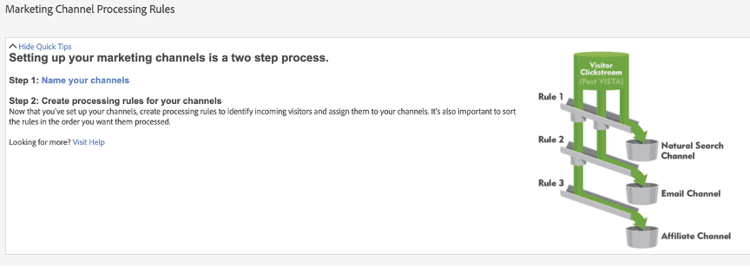
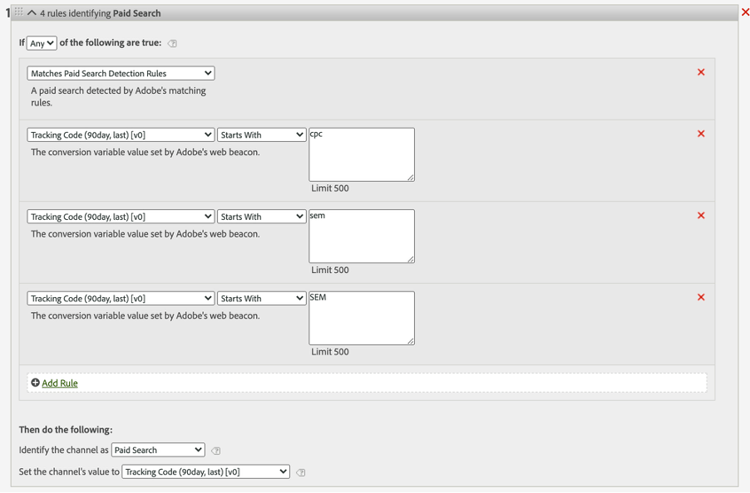
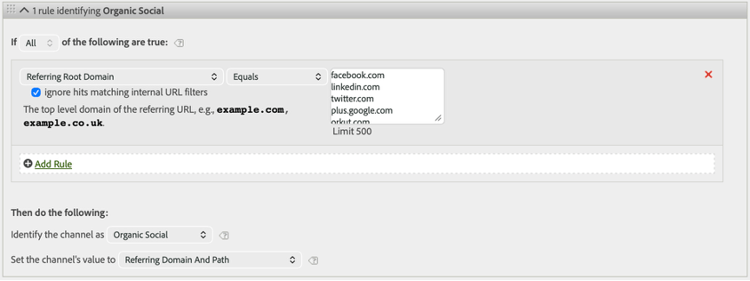
Once channels are defined, Marketing Channel Processing Rules determine how traffic is distributed. These rules are evaluated sequentially from top to bottom. The first rule that matches assigns the channel for that visit, and processing stops immediately and is assigned to that channel. If a hit doesn’t meet the conditions for the first rule, it then moves onto the second rule and evaluates whether there is a match. If there are, processing stops and it is assigned. If not, it continues evaluating against each rule until a match is found.
Because of this waterfall logic, rule order is foundational. Explicit, high‑intent traffic, typically driven by paid or owned campaigns with tracking parameters, should be evaluated before broader, inferred sources such as organic search or referrals. Other referral sources, such as internal referrers or direct traffic, should be kept at the bottom of your list so as not to overwrite more important channels.
Using campaign parameters to capture marketing intent
Referrer data alone is rarely sufficient for accurate attribution. Campaign parameters embedded directly in URLs allow marketers to explicitly communicate intent, removing ambiguity and improving classification accuracy.
Standard UTM parameters - such as source, medium, campaign, and content are commonly mapped into Adobe Analytics campaign variables. These values can then be referenced directly within processing rules to drive precise channel assignment.
Campaign‑driven attribution in practice
Consider a fictional organization, TechTeachNova, promoting a regional webinar through corporate social channels. A campaign URL might resemble the following:
https://www.techteachnova.com/forms/demo‑automated‑solutions.html?utm_medium=CorpSocial&utm_source=SEM&utm_campaign=EMEA_26Q1_Webinar&utm_content=banner
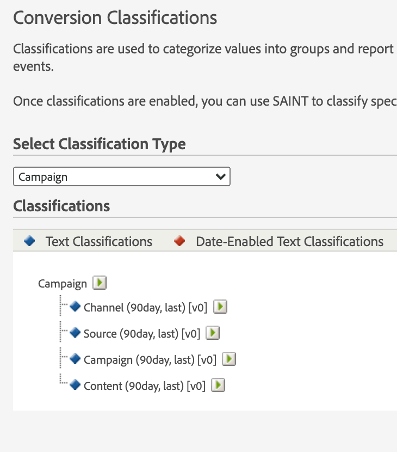
TrackingCode v[0] = Channel[v0]:Source[v0]:Campaign[v0]:Content[v0]
When a visitor arrives, Adobe Analytics captures these parameters into the campaign variable. Processing rules evaluate the values and assign the visit to the appropriate Marketing Channel.
Setting up your marketing channels is a two-step process:
Step 1: Name your channels
Step 2: Create processing rules for your channels
EXAMPLES: Create Rule sets by processing order:
1. Paid search
2. Paid social
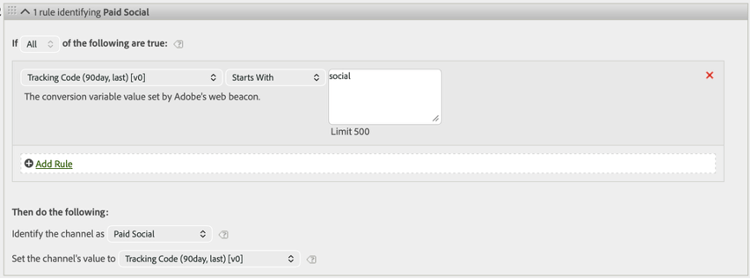
3. Email
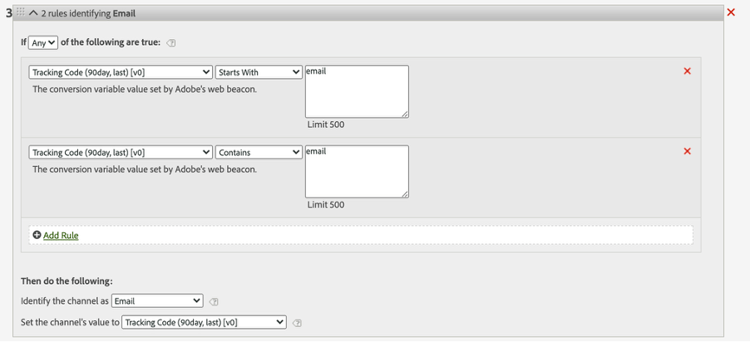
4. Natural search (SEO)
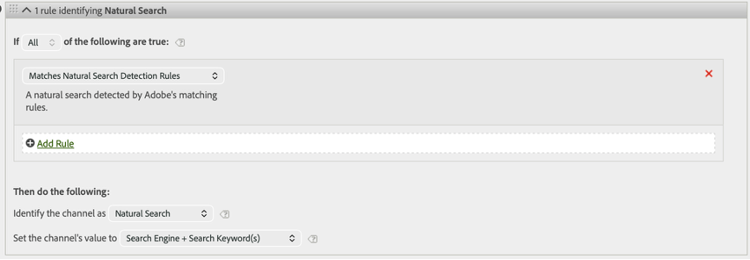
5. Direct
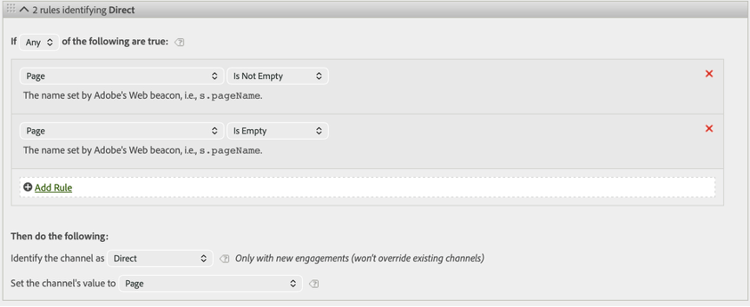
6. Organic social
From visit to attribution
Each visit is evaluated against processing rules in real time. When a qualifying channel is encountered, the Last Touch Channel updates accordingly. Over time, this creates a reliable attribution signal that reflects marketing behavior rather than accidental traffic patterns.
This transparency enables analysts to validate classifications, marketers to interpret performance confidently, and stakeholders to trust the resulting insights.
Conclusion
Marketing Channels are more than a reporting configuration - they are a strategic framework for aligning marketing intent with measurement. When channels are thoughtfully defined, processing rules carefully ordered, and campaign parameters used consistently, attribution shifts from a source of debate to a source of confidence.
Organizations that invest in a disciplined Marketing Channel strategy gain clearer insight into what drives engagement and conversion, enabling better decisions across teams and more meaningful conversations about performance.